
The 109th edition of the Giro d’Italia came to an end on Sunday in the streets of Rome, where a final bunch sprint enabled Paul Penhoët to secure an excellent third place. Groupama-FDJ United Cycling Team therefore concludes the first Grand Tour of the season with two podium finishes and two additional top-10 results. A mixed outcome considering the determination shown by the team’s eight riders, all of whom successfully completed the « Corsa Rosa ».
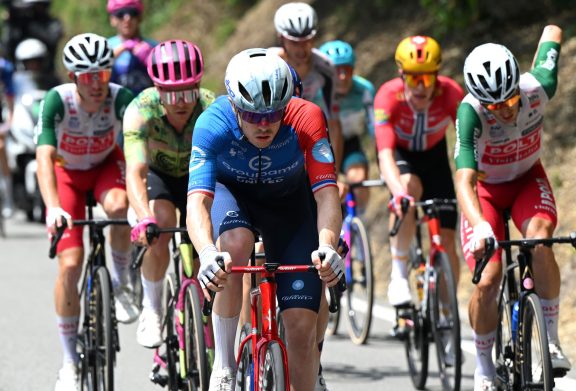
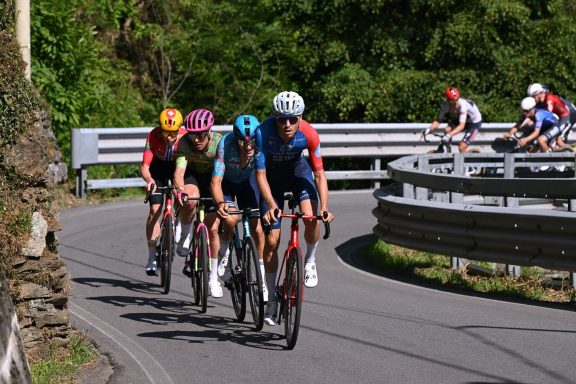
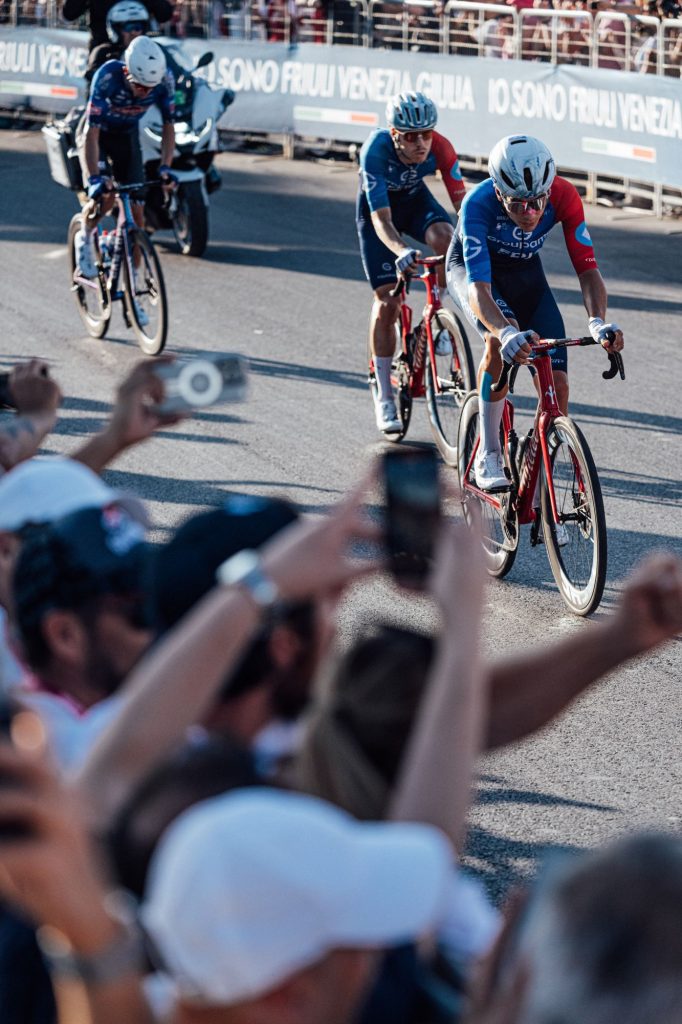
All roads may lead to Rome, but those taken by the Giro riders in the final stretch were certainly not the easiest. Before reaching the Colosseum on Sunday, two major mountain stages still awaited the peloton on Friday and Saturday, setting the stage for a final battle in the general classification. On Stage 19, which featured the Passo Giau, Groupama-FDJ United once again sought to anticipate the favourites’ showdown. “On mountain stages, our best option was to make the breakaway and hope it would be the right one,” explained Frédéric Guesdon. “We didn’t have a climber capable of matching the Giro’s strongest GC contenders, so we had to try and get ahead of them. Unfortunately, it didn’t work out. On Friday, Rémi, Josh and Rémy all tried, but the GC riders started attacking on the first climb, so our plan never really came together. Still, we have no regrets because we knew the breakaway was our only realistic chance of a major result.” The favourites eventually battled in Alleghe, where Sepp Kuss claimed victory. The following day, Axel Huens managed to join the breakaway before the two ascents of Piancavallo that featured in the final 70 kilometres. The young Frenchman impressively held his own at the front over the first climb, but as expected, the stage win ultimately went to pink jersey Jonas Vingegaard. “Axel went very far and rode a great race, but unfortunately it didn’t pay off,” commented Frédéric.
“A small step forward” – Paul Penhoët
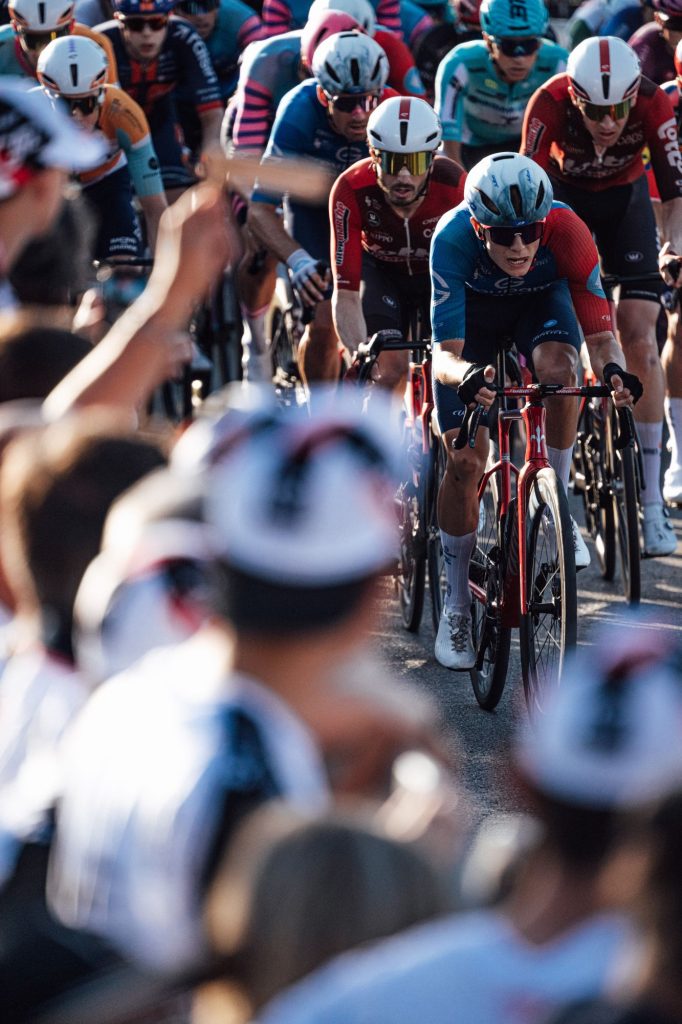
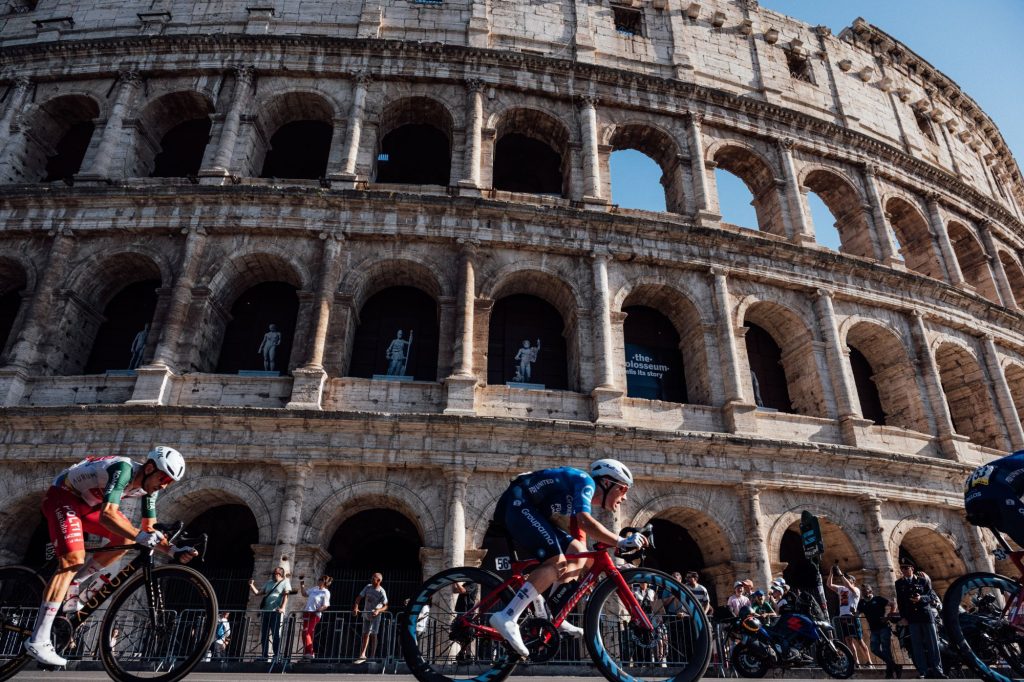
After a rapid transfer from northern Italy to Rome, only one final opportunity remained on this Giro, in the streets of the Italian capital. The sprinters were determined to have their say after the disappointment in Milan, but once again the race proved extremely fast and nervous. Groupama-FDJ United played an active role, sending first Rémy Rochas and then Rémi Cavagna up the road on the finishing circuit. “Attacking was partly pleasure, but partly strategic as we had to find the best way to help Paul,” explained William Green. “In Milan, only the four strongest sprinters in the race finished ahead of him. To support him, we needed to put riders at the front to put pressure on the other teams and force them to chase, making the final a little clearer.” Rochas attacked with 45 kilometres remaining, Cavagna joined him with 25 kilometres to go, and the French time trial specialist managed to stay clear of the peloton for almost a full lap. Then, with two laps remaining, Filippo Ganna launched his own attack, forcing the sprint teams to work hard until just three kilometres from the finish before finally bringing him back. “Brieuc and Cyril also contributed to the chase, and after that we had complete confidence in Axel to support Paul,” added William.
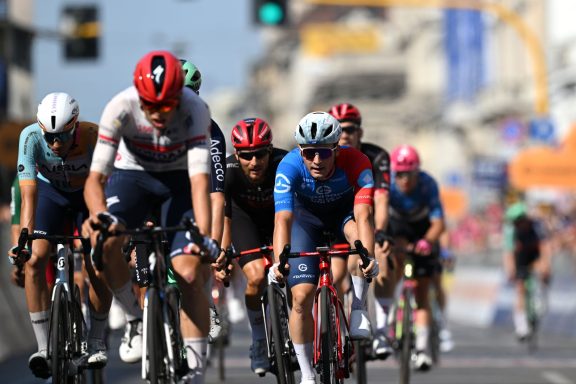
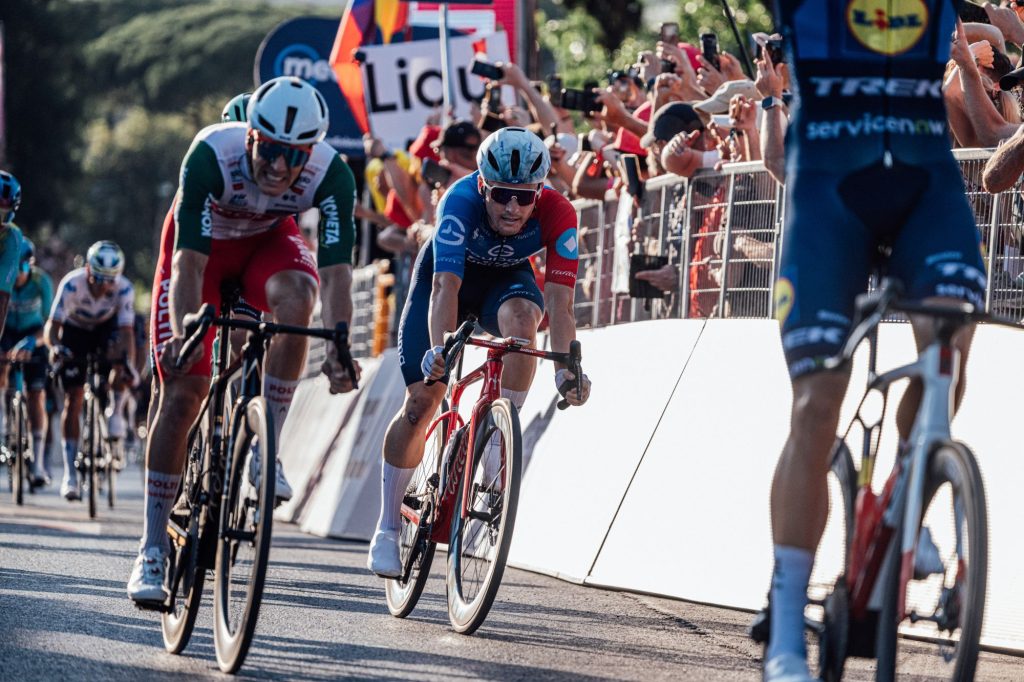
The intensity of the racing through Rome naturally reduced the size of the peloton heading into the final. “Axel told me to stay calm, and I did,” said Paul Penhoët. “He had a mechanical with 2.5 kilometres to go, but we didn’t panic. Then I saw an opening on the left inside the final kilometre, moved into it, and left a small gap before the left-right corner so I wouldn’t have to brake. I entered the last kilometre in seventh or eighth position, and my goal was to launch my sprint.” With approximately 250 metres remaining, at the start of the slightly uphill finishing straight, the young Frenchman did not hesitate when a gap opened alongside the barriers. Almost instantly, the Groupama-FDJ United sprinter surged into the lead and held it for around fifty metres before Jonathan Milan unleashed his power and came past him. Riding in Milan’s slipstream, Giovanni Lonardi also managed to edge ahead of Penhoët, who nevertheless secured a superb third place. “Maybe I could have finished second if I’d waited a little longer, but what mattered to me was launching my sprint,” he said. “I really wanted to perform because I’d been very disappointed with my Giro and, more generally, with my season so far. I wanted to finish on a positive note for myself, but especially for the team and my teammates, who have supported me since the start of the year. In the end, I had nothing to lose, and it’s a small step forward.”
“We fought until the end” – Frédéric Guesdon
After finishing eleventh in Sofia and ninth in Milan, Paul Penhoët finally achieved the significant result he had been seeking throughout these three weeks. “The Giro route was quite unique, particularly with those two potential sprint stages where Movistar made the race hard, which ultimately turned into two missed opportunities,” explained William. “Aside from that, we tried to make the most of every other chance, although the crash on the opening day remains a disappointment. The sprint field was obviously extremely strong at this Giro, but our objective from the start was to reach the podium, and we managed to do that on the final day.” The result also added some substance to the team’s overall tally, which ultimately consisted of two podium finishes (Paul Penhoët and Rémi Cavagna) and two additional top-10 results (Josh Kench sixth and Paul Penhoët ninth). “I think we did give it everything to achieve the best possible result on every stage that suited us,” said William. “The riders were active throughout the Giro, even if we ultimately fell short of the results we were hoping for,” added Frédéric. “The team had also been reshaped with Paul joining the squad and Brieuc replacing Clément Berthet. Overall, I think it was a decent Giro. We were present, and at least we tried. We fought until the very end.”
All eight Groupama-FDJ United riders also successfully reached the finish in Rome, bringing their three-week adventure to a close. “With the exception of Rémy, Rémi and Cyril, who were more experienced, this was the first or second Grand Tour for everyone else,” Frédéric pointed out. “Josh emerged as one of the revelations of the race, Johan showed he could be proactive over three weeks, and Axel, riding his first Grand Tour, was still there and competing on the final mountain stage.” “The riders handled the mental and physical demands of a Grand Tour quite well, even if there were difficult moments along the way,” concluded William. “It was a real learning experience in managing emotions, bouncing back from one day to the next, and giving 100% to the team. They demonstrated that during the final days of racing.”