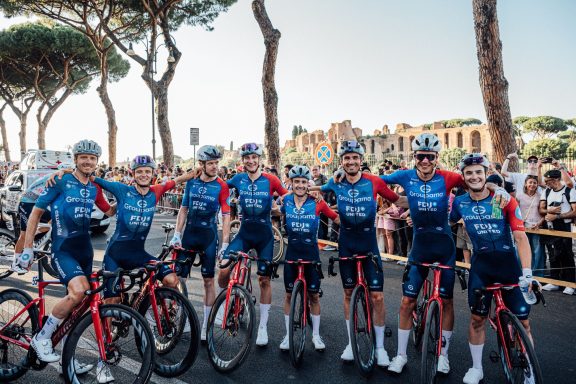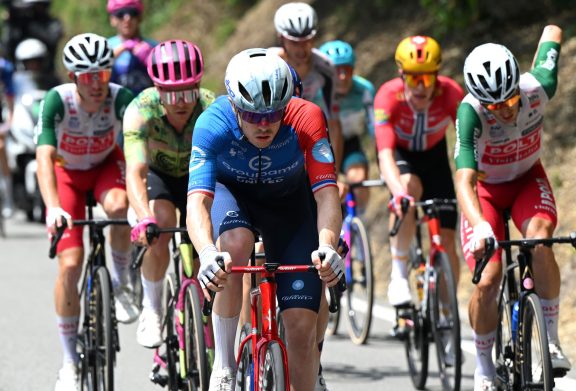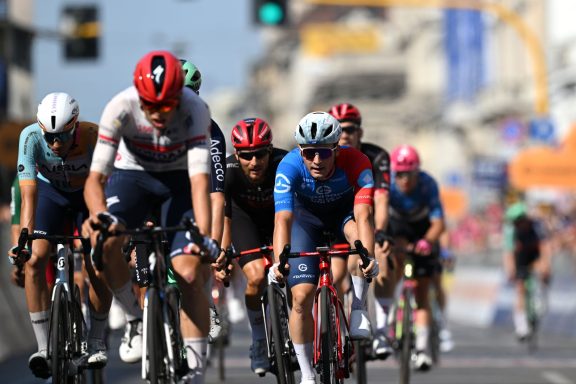

After its first stage podium of this year’s Giro on Tuesday, Groupama-FDJ United looked to keep the momentum going over the past few days by racing in a highly aggressive way. Present at the front in every stage, the French squad reached its high point on Friday on the road to Verbania, where Josh Kench claimed sixth place after outstanding work from Axel Huens and Johan Jacobs. The result showed an exemplary team spirit, while the team continues to chase an even bigger reward.
The second week of the Giro d’Italia had started under very promising circumstances between Viareggio and Massa, where Rémi Cavagna secured third place in the individual time trial. Inspired by the former French champion, Groupama-FDJ United aimed to build on that momentum as the race headed north through Italy. That inevitably meant targeting breakaways during the three hilly stages leading up to Saturday’s first major mountain test in the Aosta Valley. From the start in Porcari on Wednesday, the French team set the tone by placing Cyril Barthe, Johan Jacobs and Axel Huens in an early move.
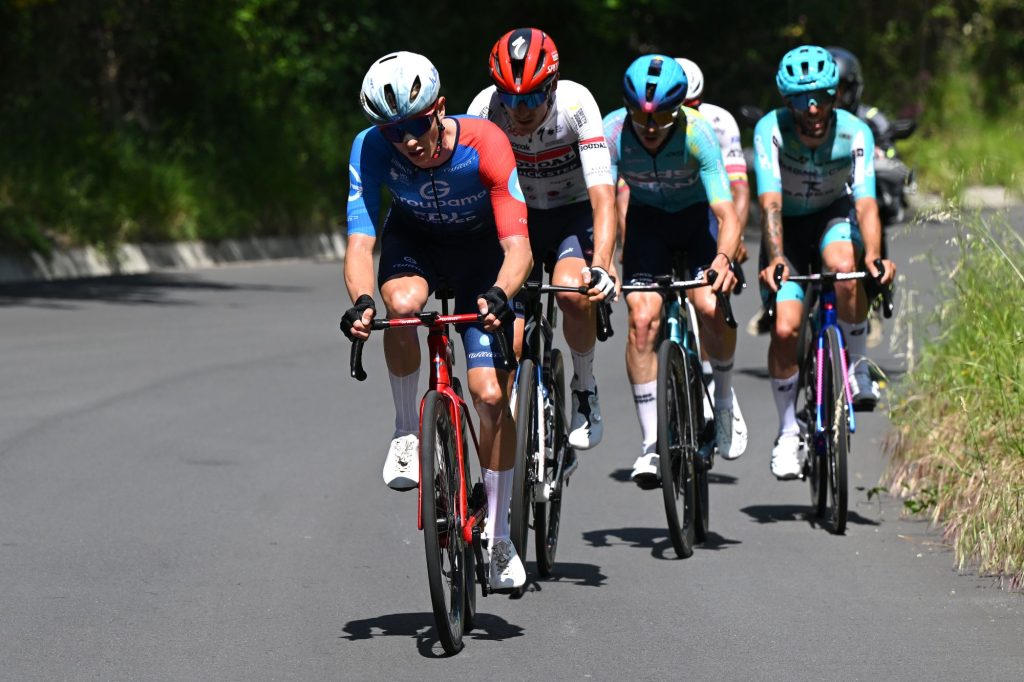
However, the breakaway did not truly form until the first climbs midway through the stage, where Rémy Rochas and Brieuc Rolland also launched attacks. “This Giro has been complicated when it comes to establishing breakaways, with long 80-to-100-kilometre flat sections at the beginning of stages,” explained William Green. “It’s a real team effort to allow the climbers to get up the road. The goal that day was to place Rémy or Brieuc in the break because we knew the final two climbs suited them. Brieuc had to make a huge effort to bridge across.”
The Breton rider spent nearly half an hour chasing before finally making it to the front group. But he paid for those efforts on the next long climb, around sixty kilometres from the finish, when the strongest climbers accelerated. Jhonatan Narváez eventually took his third stage victory of the race, while Rémy Rochas finished 16th in the peloton. On Thursday, at the start of Stage 12 in Imperia, Johan Jacobs immediately went back on the offensive, although the day’s first breakaway ultimately formed without him. “The objective was once again to make the break because we weren’t sure who would control the race,” said William. “In the end, Unibet Rose Rockets and Soudal-Quick Step took responsibility, but they probably overdid it. Since the gap was still small midway through the stage, Johan took the opportunity to launch another move.”
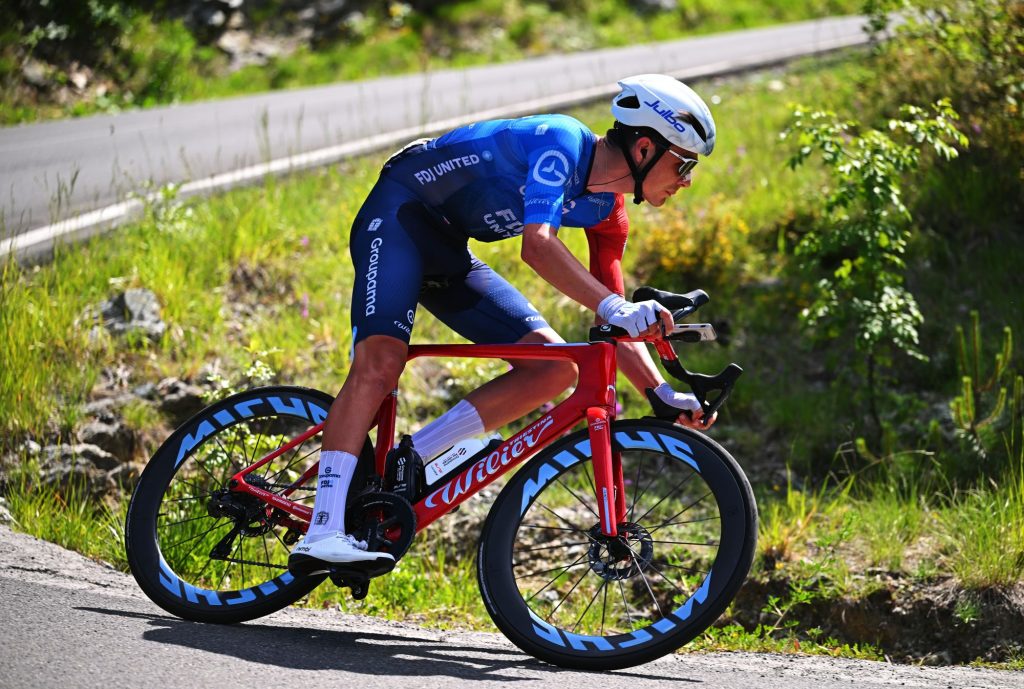
With 100 kilometres remaining, the Swiss rider formed a counterattack with five others, though their advantage never exceeded two minutes before the day’s decisive climbs. Movistar Team then raised the pace to drop the pure sprinters. Johan Jacobs was caught on the first climb, and only around sixty riders remained after the second ascent, including Josh Kench, Rémy Rochas and Brieuc Rolland. At the finish, Alec Segaert anticipated the reduced bunch sprint, while Rémy Rochas (18th) and Brieuc Rolland (19th) both secured top-20 finishes.
“I’m disappointed because I let the boys down” – Josh Kench
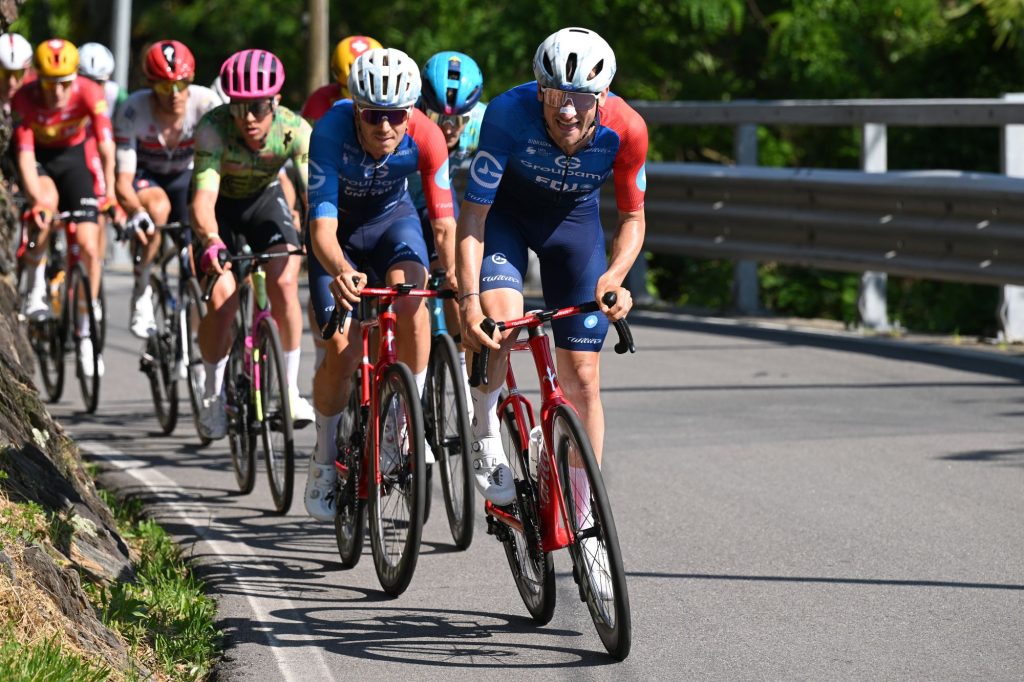
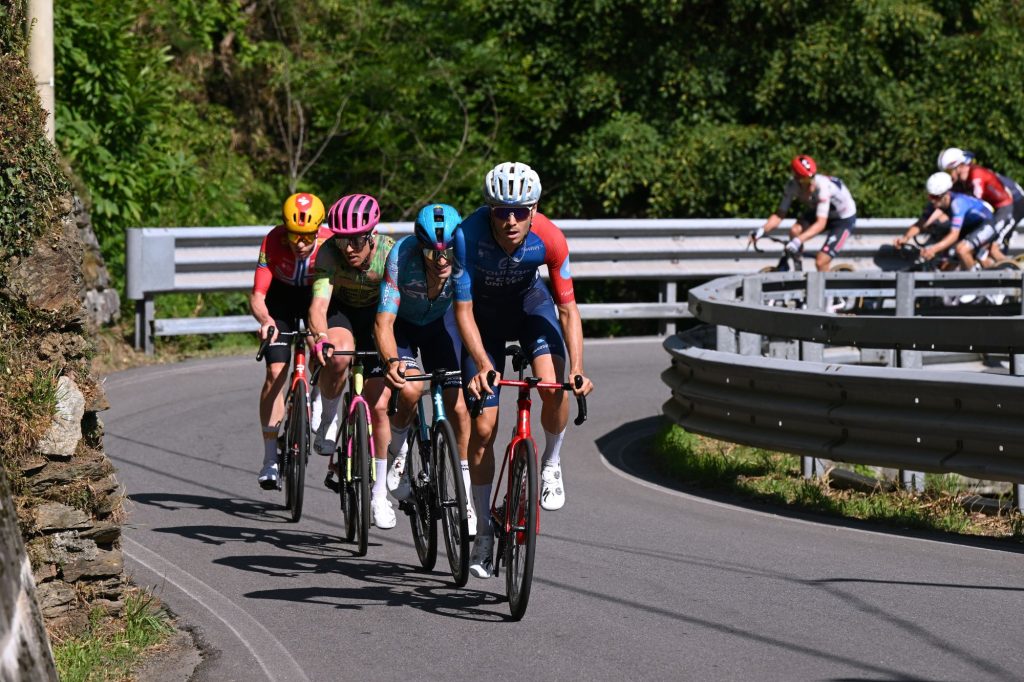
Despite not getting the results their attitude deserved, the French squad was ready to go again on Friday between Alessandria and Verbania, where only two late climbs were expected to shape the outcome. “On paper, the race once again looked quite open,” William explained. “The start was flat again, so getting into the break was going to be difficult. But we had a very clear strategy to manage everyone’s energy and place the right riders in the move. I think we were excellent in that regard.” While Johan Jacobs immediately made the front group, Josh Kench and Axel Huens attacked from behind after around fifteen kilometres. “They were in the right place at the right time, exactly as planned, and they managed to bridge to Johan’s group,” William commented. “It took us a while to get across to the first breakaway, but it was the ideal situation for us,” added Axel. “We really wanted one of our climbers in the break with one of our rouleurs. In the end, with Johan and me there to help Josh, we even had two. It was perfect.” The fifteen-man breakaway quickly forced the peloton to give up the chase, allowing the gap to grow beyond ten minutes and leaving the stage win to be fought out among the attackers.
After 165 relatively calm and flat kilometres, the breakaway reached the bottom of the first of the two final climbs. Johan Jacobs kept things under control on the climb to Bieno before Axel Huens produced a massive effort at the base of the Ungiasca ascent. “They were all-in for me”, explained Josh Kench. “The goal was to prevent attacks before the climb, especially from riders like Bjerg, and then I had to go full gas and hope it would be enough to drop them.” With 2.5 kilometres remaining to the summit, the New Zealander launched his first attack, and only three riders managed to follow. On the steepest slopes, he attacked again, though he still could not break clear. Eventually, Andreas Leknessund and Alberto Bettiol gained a small advantage before the summit, which Josh Kench reached in third place, 25 seconds behind the Italian rider, with thirteen kilometres remaining to Verbania. In the final, Josh Kench was unable to close the gap and instead saw three riders come back to him. In the sprint from the chasing group, 44 seconds behind the winner, he ultimately had to settle for sixth place. “The team supported me completely, and I’m pretty disappointed because I let the boys down,” said Josh. “They gave me confidence, and I gave it everything. I hope I still made them proud. Maybe I could have waited another kilometre before attacking and the result might have been different. It’s disappointing.”
“We showed how strong we are as a team”– Axel Huens
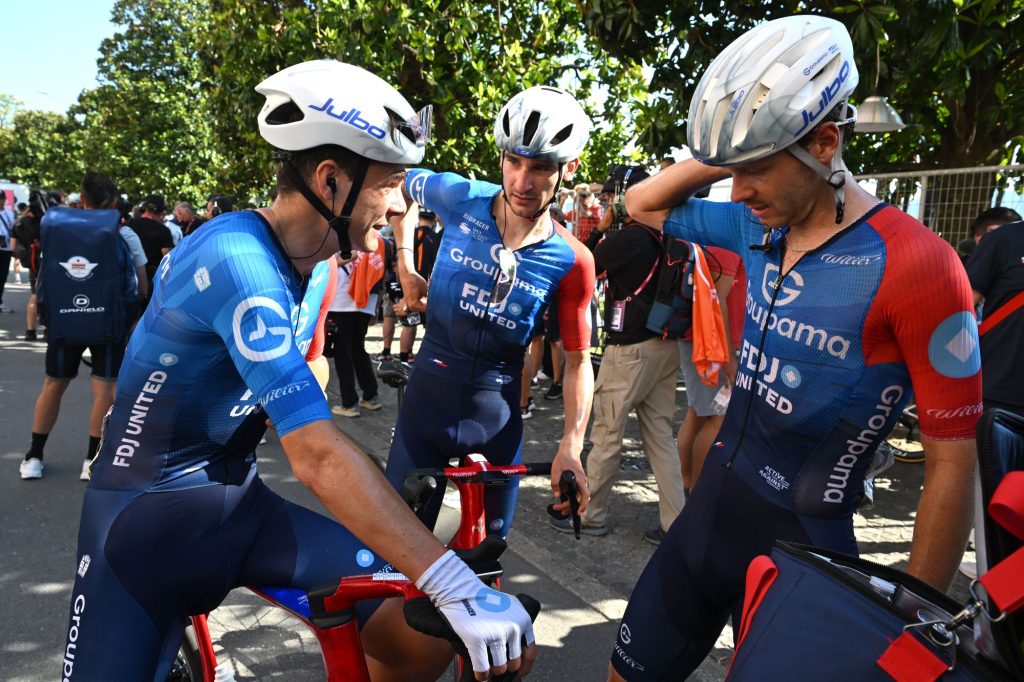
“We decided to go all-in for Josh on the climb,” Axel explained. “Unfortunately, it didn’t work. He came up against stronger riders, but we have no regrets. I think we rode a really good race.”“It’s easy to reflect back and say the strategy could have been different,” William added. “Attacking before the climb also carried risks. Josh could perhaps have been more patient on the ascent, but then we risked arriving with a bigger group, and he’s not the fastest rider in that scenario. We chose the safest option to try to win. He may have been the best climber in the group, but after twelve stages it’s another story. He’s also the only rider from the break who’s been going hard all twelve stages. You never really know what to expect before the climb, and we still don’t know Josh’s limits. We had to try. We could have raced it differently, but would it really have changed anything? I don’t think so.” What could not be questioned, however, was the team’s commitment and attacking mindset.“There are still great opportunities ahead, and we showed how strong we are as a team,” Axel concluded. “We’ll try again.”“We were expecting a result of this calibre from Josh, and I think the team now realizes his potential,” William added. “For his first WorldTour season and his first Grand Tour, he just keeps improving. Next time, he’ll do even better. There are still many opportunities to come.”