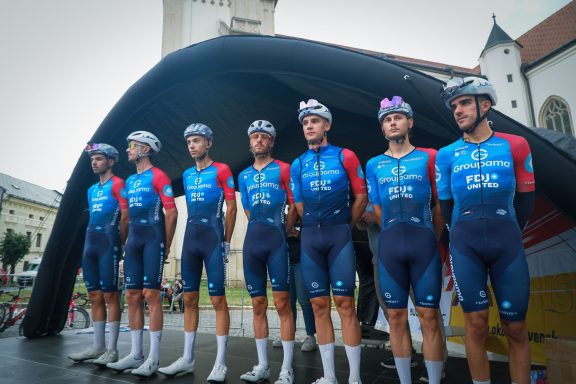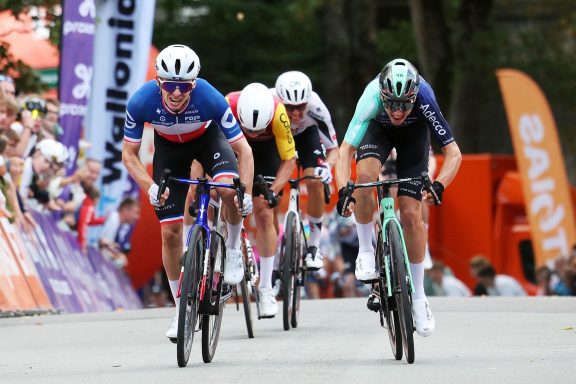

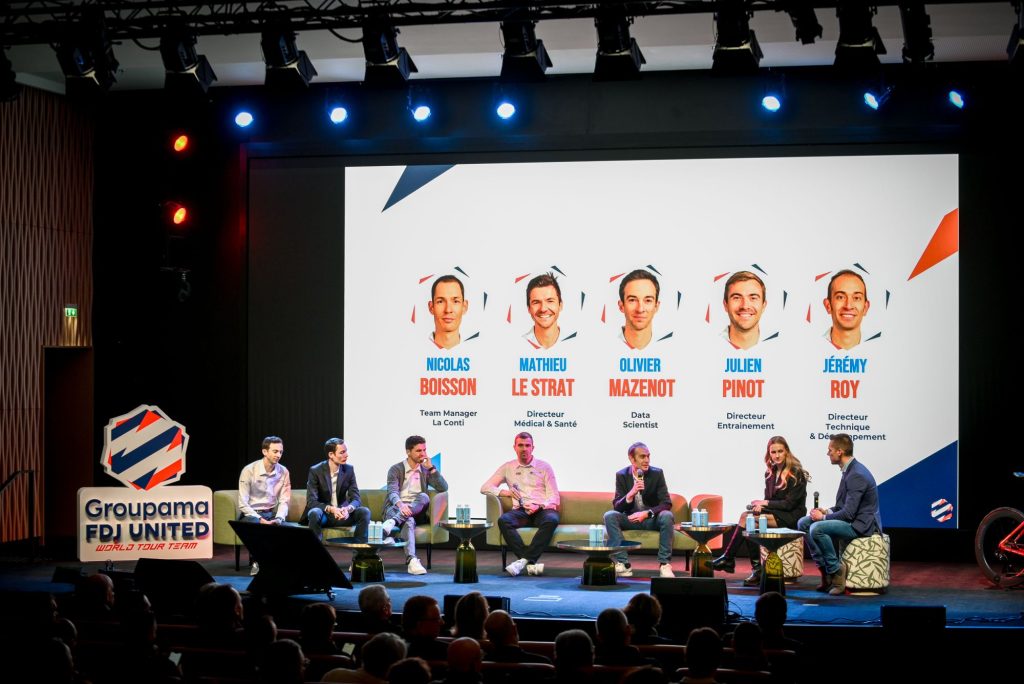
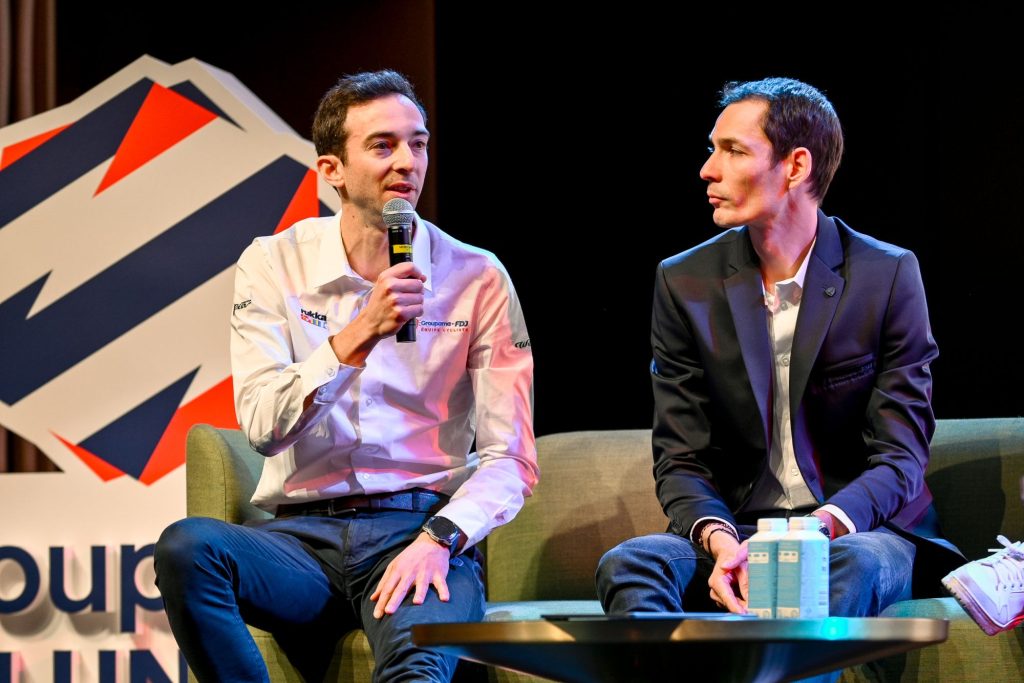
Already used across many industries, Artificial Intelligence is also playing an increasingly important role in the pursuit of performance and efficiency within the Groupama-FDJ United cycling team. Olivier Mazenot, the team’s data scientist, explains how these technologies are transforming everyday work without ever replacing human expertise.
AI in a Nutshell
“Artificial Intelligence refers to technologies capable of performing tasks that normally require human intelligence, such as recognizing images, making predictions, or generating content. Machine learning and deep learning are both part of AI. Their core principle is simple: instead of relying solely on predefined rules, these systems learn from data.”
How We Use AI
“Within the team, one of AI’s main applications is software development, although this has now become common across the entire software engineering industry. Two years ago, our job consisted of writing lines of code and building applications for coaches and riders. It was a long and painstaking process. Today, we write far less code ourselves. Instead, we manage AI agents that assist us in designing tools, generate part of the code, and dramatically accelerate development. We’re not talking about a 20 or 30% improvement. On some tasks, we can work two or even three times faster. Like everyone else, it’s essential for us to use modern tools to become more efficient and ultimately improve performance.
AI is also present in a more indirect way because many of the systems we use already incorporate it. Artificial Intelligence is already everywhere, and cycling is benefiting from it. Today, almost every technology company uses AI in one way or another. For example, it is integrated into certain glucose monitoring and data analysis tools. In training, AI is also becoming valuable for automatically segmenting interval sessions. Previously, coaches had to divide each workout manually, interval by interval. Today, algorithms can perform this segmentation. In fact, this is one example of a model that we trained ourselves using our own data.
A large part of a data scientist’s job consists of collecting, cleaning, organizing and making data usable. This is essential before any meaningful models or analyses can be developed. Today, that process is much easier, much faster, and allows us to go much further while maintaining far greater control over our data.”
Where We Don’t Use AI
“In theory, we could use AI in the field of health, particularly to identify certain risk factors associated with overuse injuries. However, medical data is highly personal and sensitive, meaning strong safeguards are essential. Furthermore, many injuries in cycling result from crashes, which remain extremely difficult to predict on an individual basis. AI could certainly contribute in this area, but it is not currently one of our priority projects.
AI could also theoretically help us anticipate the strategies of rival teams more effectively. However, this would require collecting and structuring an enormous amount of data covering race scenarios, team line-ups and tactical contexts. That would represent a considerable amount of work for results that would remain uncertain. An AI model would not necessarily outperform the intuition of experienced sports directors. In the future, however, it could become a valuable decision-support tool by highlighting scenarios and trends that are difficult for humans to detect. It would not replace the sports director’s expertise but rather provide additional insights when decisions need to be made.”
The Future of AI in Cycling
“AI will play an increasingly important role in every aspect of performance. There will be even more data, smaller sensors, and increasingly sophisticated tools. We may rely less on wind tunnel testing and conduct more field testing thanks to AI-powered systems. In terms of training, I believe AI will eventually connect every aspect of performance. By analysing a rider’s complete dataset, AI will be able to identify connections that humans simply cannot see. It may understand an individual rider’s specific characteristics, how they function, how much recovery they require, and why they perform better at certain times than others.
Just as AI supports people, people must also support AI. No matter how intelligent it is, AI cannot achieve much without the right data. Our role is to establish the framework that provides high-quality data for the models our colleagues will use. In the future, coaches will probably rely more heavily on AI, but they will do so using data whose quality, structure and conditions of use we control.
Looking ahead, AI may also help us assess a rider’s remaining potential for improvement. In recruitment, it could extract the most meaningful insights from a rider’s data. It will never be infallible, but the more relevant, reliable and representative data we have, the more accurate the models will become. As we continue to build richer datasets, we may become increasingly effective at identifying talent. Perhaps, in the future, AI will help us recruit riders who would otherwise have remained outside traditional scouting pathways.”
The Limits of AI
“The biggest challenge is avoiding the temptation to do everything simply because we now have such powerful tools at our disposal. The danger is producing far more work that ultimately doesn’t provide real value. We must never lose sight of what matters most: the rider needs to eat well, sleep well, be in peak condition on race day, and have enough tactical intelligence and autonomy to make the right decisions. It’s easy to become obsessed with endless optimisation. That’s the challenge we face today. Many of these areas are still exploratory. AI allows us to launch projects much more quickly, but that doesn’t mean every project will prove worthwhile in the end.
People often assume AI will replace us. In reality, AI hasn’t reduced our workload, it has increased it. What it has done is make us more powerful. AI enhances human capabilities and enables us to accomplish much more sophisticated tasks. The objective isn’t to replace coaches with AI because coaches will always possess an understanding that AI cannot replicate. However, if they know how to use these tools effectively, they can gain a significant competitive advantage. The goal is to support people, not replace them. The guiding principle is simple: the combination of AI and human expertise is stronger than AI alone or humans alone. In a performance-driven environment, we simply cannot afford to ignore AI. The problem has never been a lack of ideas, it has always been the amount of time required to implement them.
It’s far more valuable to focus AI on training methods and performance technologies than on secondary matters. We may eventually explore those as well, but they are not our priority today. Above all, our team is filled with talented people at every level. Coaches, riders and mechanics each possess unique expertise. Every area of our organisation relies on human ingenuity and intuition. These are qualities that won’t be replaced overnight.”
About Olivier Mazenot
“I’m 38 years old and originally trained as a mathematics teacher. After obtaining both the CAPES and the Agrégation teaching qualifications, I changed career and became a data scientist in 2020. Joining Groupama-FDJ was my first experience working professionally in this field.
I work on AI-related projects alongside my colleague Victor Scholler, who holds a PhD in Sport Sciences and recently graduated in Data Science. Together, we develop our internal performance platform and collaborate daily on the team’s various Artificial Intelligence projects.”
Strengths: You need to be good at mathematics, logical thinking and programming. In a way, you have to be a bit of a geek, someone who enjoys understanding computer systems and experimenting with new ideas. You also need a solid understanding of the environment you’re working in. I’ve always followed and loved cycling, and that helps give meaning to the data.
Weaknesses: My biggest weakness is probably that I don’t always succeed in explaining highly technical subjects in simple terms. Sometimes I use language that is too technical for the people I’m speaking to. My background is rooted more in mathematics and engineering than in professional cycling, even though I’ve always followed and practiced the sport.