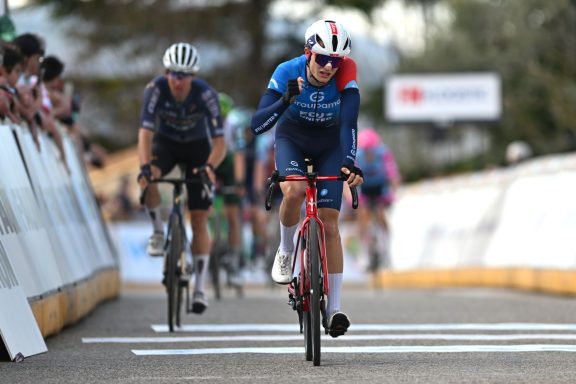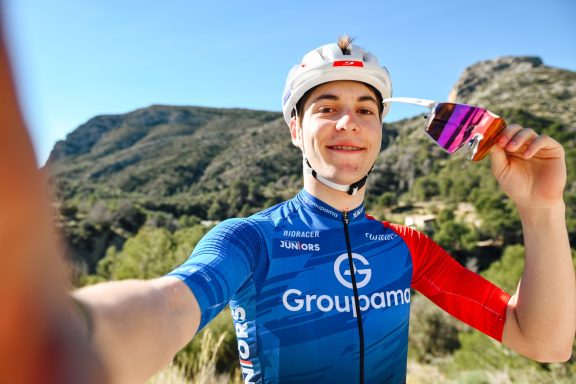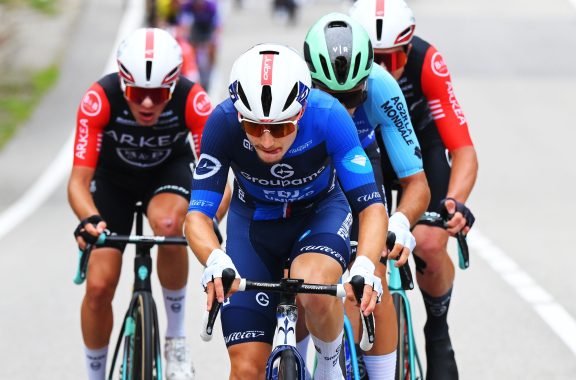


281 days passed between Maxime Mortier’s terrible crash in June 2025 and his victorious return at the end of March. Nine months ago, the toll was extremely severe: a fractured femur, part of the pelvis broken, five broken vertebrae, a concussion, a punctured lung, and ruptured blood vessels in the intestine. Yet on the Route d’Éole, the 17-year-old marked his return to cycling. Today, he looks back on the journey.
THE CRASH – TIME TRIAL OF À TRAVERS LE BEAUJOLAIS (JUNE 21, 2025)
I was there to win, and I started very determined. Leaving a small village, we entered a descent and I wanted to gain as much speed as possible to get over the following climb as quickly as I could. I went very fast, too fast. I reached 71 km/h that day, and I must have been slightly below that when I went straight on in a corner after just 500 metres. I lost consciousness on impact, and my brain erased the last three seconds of the crash. I was going so fast that the following car didn’t see me crash, and neither did the lead motorbike. I was unconscious for 5 to 10 minutes, and it took them about 15 minutes to find me. I woke up trapped in tree trunks. I had severe pain in my head and leg, and it was only when I saw myself in cycling shorts that I realized I was on a bike race. I tried to move, but it was impossible. My leg was wedged between two trunks.
The race medical team arrived but couldn’t do much. They called the hospital in Lyon, which sent a helicopter. The wait lasted nearly an hour, though I remember very little of it. They put me to sleep to extract me from the tree and airlift me, and I woke up in a hospital bed. They operated on my femur as soon as I arrived. They then found that I had several broken vertebrae and ruptured vessels in my intestine. After two days, they had to insert a drain to remove the blood. My mother and brother were at the hospital, but I was on painkillers and couldn’t really speak. The first three days were very difficult because I was extremely weak. I was lying down without a brace yet, so I just stayed still doing nothing.
RECOVERY (JUNE – SEPTEMBER 2025)
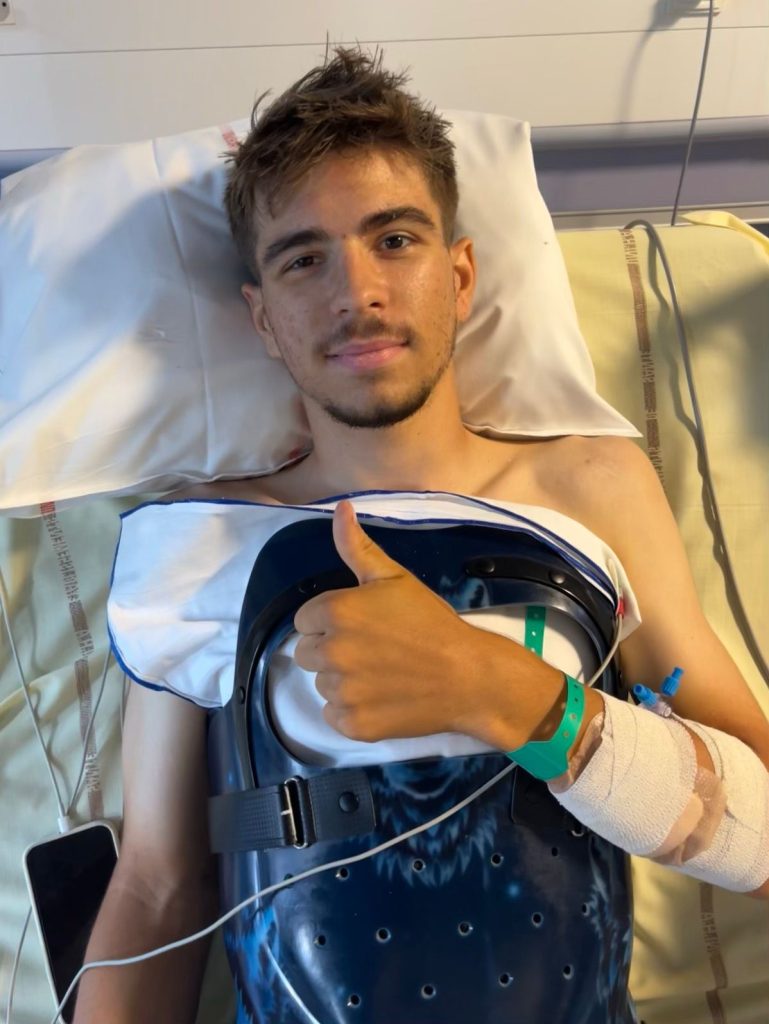
After a week, I was transferred to a hospital in Dijon to be closer to my family. I also lost eleven kilos during my first two weeks in the hospital. During the first week, I wasn’t allowed to eat or drink because of the surgeries. After that, I tried to eat, but I couldn’t manage. They diagnosed me with superior mesenteric artery syndrome and inserted a feeding tube. That lasted a month. In total, I spent nearly six weeks in the hospital. My daily routine was simple: I’d wake up, look at my phone, watch the Tour de France all day, and go to bed. It wasn’t very fun, but at least the Tour helped pass the time. I was still very weak. I sometimes fainted just trying to stand up. Normally, at that time of year, I help my father, who is a farmer, with the harvest. Instead, I was stuck in bed. I called my family very often, which helped fill the days.
Very early on, I looked into my injuries. When I was told I’d have to wear a brace for three months, I thought I could do the Chrono des Nations. I was completely disconnected from reality, but I always stayed optimistic. I never thought about quitting cycling. I just wanted to come back as quickly as possible. In July, I started doing a few steps again, barely putting my foot down, but it was already a victory. In early August, I returned to Lyon to check on my femur’s progress. Everything was going in the right direction. I was able to go out in a wheelchair and stayed nearby because my sister was competing in the French Championships in La Tour-du-Pin. At that point, I still needed a lot of help. Taking a shower was difficult, and I had to be carried to my room. It was a real struggle. At the end of August, I moved to crutches. In September, I retook my French baccalaureate exam, which I had missed in June, and I also got my driver’s license! The examiner saw me arrive with a brace and crutches, he must have had some doubts, but I passed, and I was very happy to regain some sense of normal life.
REHABILITATION AND RETURN TO TRAINING (OCTOBER 2025 – JANUARY 2026)
Right after my accident, the team doctor, Stéphane Desbuisson, told me he could find me a place at a rehabilitation center in Capbreton, which is very well known. I was lucky, because even though I was a minor, I was admitted for three weeks of inpatient care in October. The goal was really to relearn how to walk, as my femur was still very limiting. I worked a lot on that and on strengthening my back. I also had many physiotherapy sessions, although we were somewhat limited because I was still in a lot of pain. We did what we could. The stay was very demanding, both physically and mentally. The centre is almost “military”: you wake up early and are busy all day to get back to the highest level. I also had to find time to keep up with my schoolwork in the little free time I had. The days were quite full.
After those three weeks, I was walking a bit better. Then there was an administrative camp in Besançon, and the new doctor, Mathieu Le Strat, scheduled another stay in Capbreton for December. In the meantime, I resumed some light activity, without intensity. I had already ridden a bit on the rollers during my first stay in Capbreton, but I rode outside again for the first time in November. It felt very strange at first. I wasn’t agile at all and was afraid on descents. Naturally, I had some apprehension, but it improved day by day. Mentally, getting back on the bike felt amazing, but physically it was still tough. I was very unbalanced: 62% strength in my left leg and 38% in my right. I was going all-out at what should have been an easy pace.
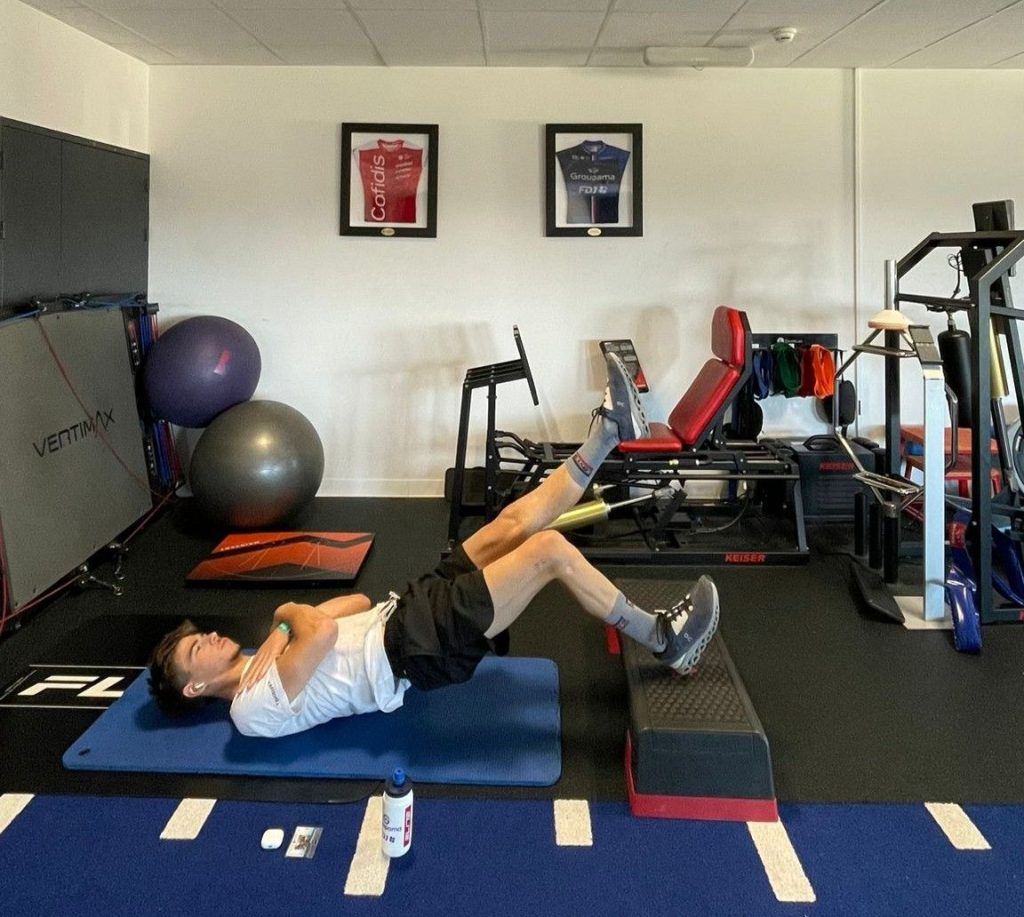
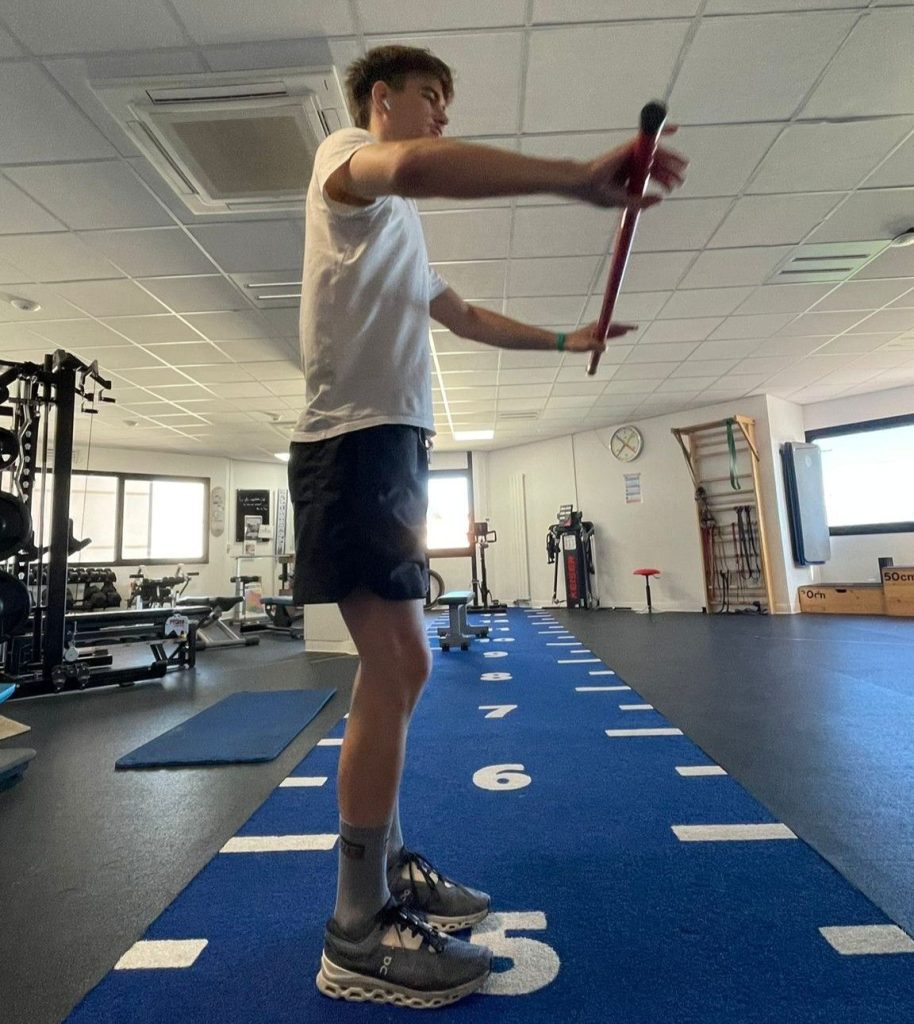
The second stay in Capbreton focused more on rebuilding athletic condition. It lasted 19 days and helped me tremendously. The schedule was again very intense, with no real breaks: physiotherapy and individual work in the morning, then rollers, swimming, and strength training in the afternoon. The days were packed, and by evening, I can tell you: you fall asleep early and sleep well! Throughout those weeks, I kept one goal in mind: to come back stronger than before. That guided me. By the end of the second stay, I wasn’t at 100%, of course, but I was an athlete again. I was extremely motivated because I felt a real boost, both mentally and physically. The data was improving, and so were my feelings.
SUPPORT AND GUIDANCE
After Capbreton, I went to Spain with my brother. We spent the holidays there with my family. Then I stayed for all of January to train with my brother and some cycling friends. That helped me improve physically a lot. My family sacrificed Christmas at home so I could continue my recovery. I’m also very grateful to my parents for allowing me to stay in Spain: it helped me reach another level. They were there for me the entire time, even during the harvest period. The Junior Program coaches were also a great support. They even came to visit me when they weren’t really allowed to! Jimmy Turgis became my coach in October, and we kept in close contact. We built a strong connection, both in training and outside of it. From riders to managers, I received many messages. The team did a lot for me at the start of my rehabilitation. Without them, I wouldn’t have been able to go to Capbreton, and I’m truly grateful for that opportunity.
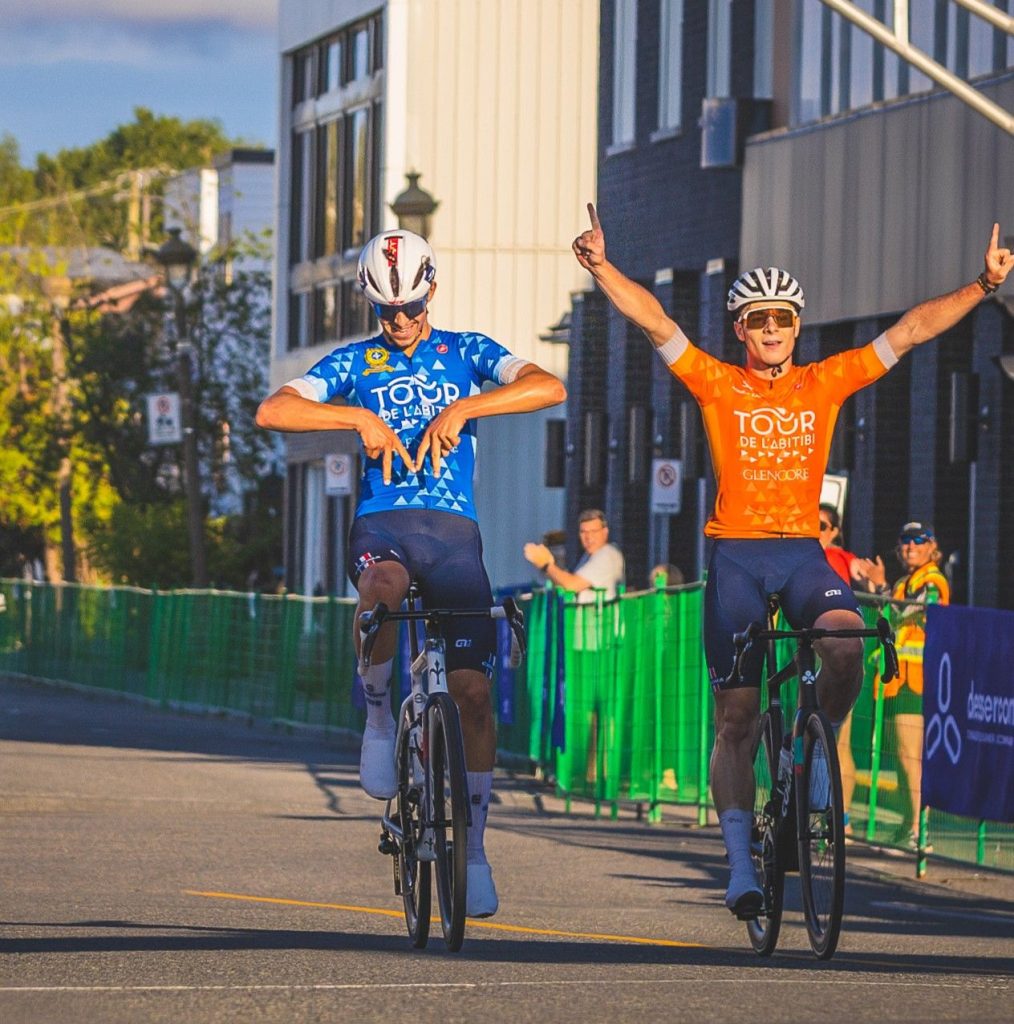
We had a Snapchat group with the Junior Program riders. During the summer, they sent me videos from their training camp in the Alps, and we called each other regularly. They told me they would dedicate a celebration if they won, and Alban kept his word at the Tour de l’Abitibi. I really appreciated that. On my birthday, during the French Championships, the WorldTour team also sent me a video wishing me a good recovery. It was very emotional. My club, Amicale Cycliste Bisontine, was also very present in terms of psychological support. Finally, I have very fond memories of all the medical staff I met, especially in Capbreton. I built strong bonds with them. They told me they would come support me the day I ride the Clásica San Sebastián. They are wonderful people, and I was deeply touched by their words.
© Image Nomade Production
THE WINNING RETURN
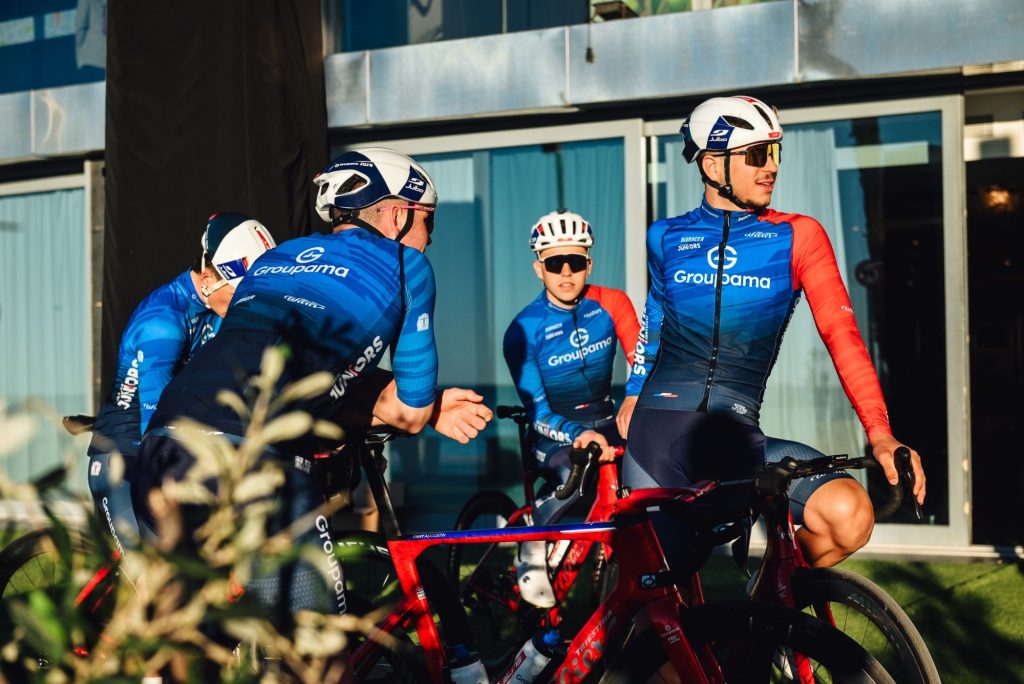
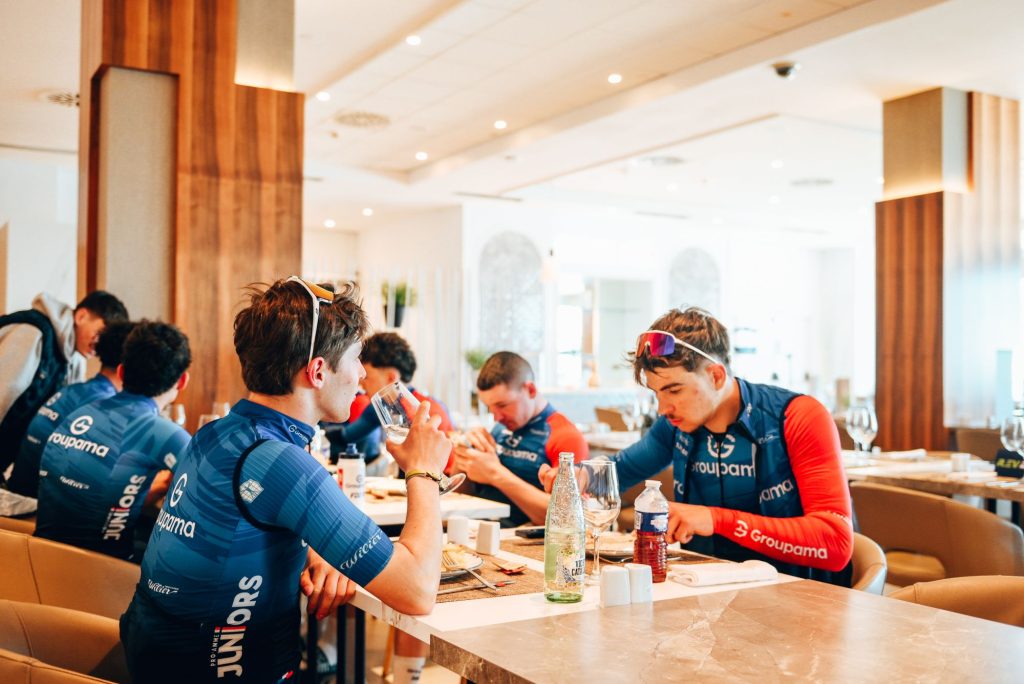
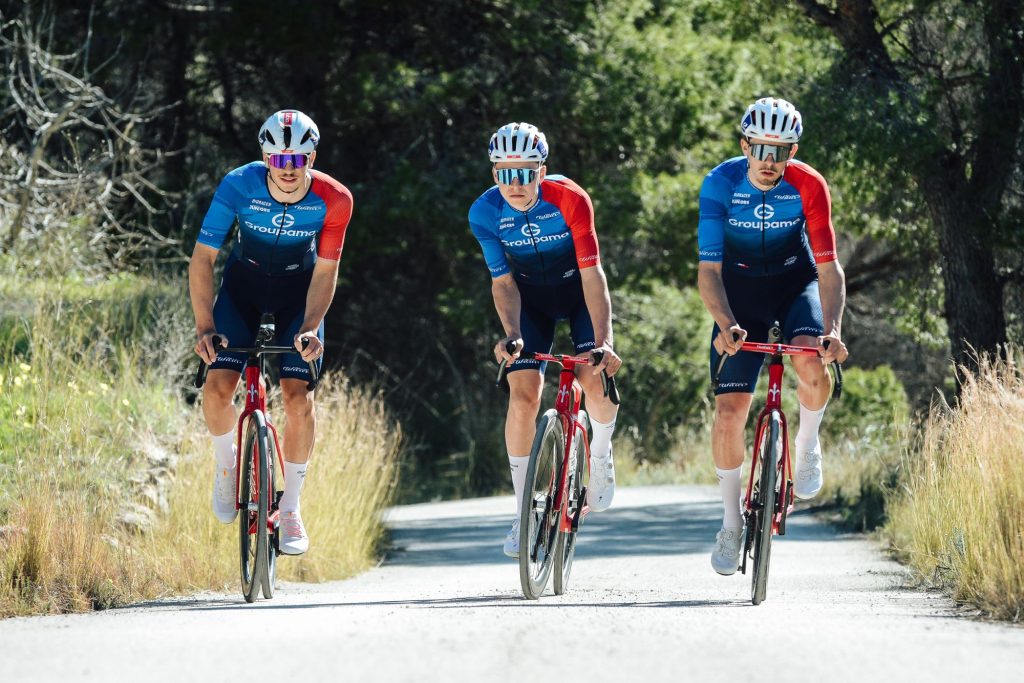
We had a training camp in Spain in February with the Junior Program riders. We had a great time, and I realized I wasn’t doing too badly compared to the others. My winter in Spain had helped me regain a good level. I rode again with former and new teammates. We had things to talk about, but it felt like I had never left! I felt better and better each day and knew I would be competitive in the first races. Of course, I was a bit nervous at the start of the season, but I wasn’t too afraid. I’m less reckless on descents than before, but I’m not off the pace. My first UCI race with the Junior Program was the Guido Reybrouck Classic. The first stage was a time trial, and I knew I could do well. I finished 20th, and given the level, I was quite satisfied. The next day, my role was to lead out our two sprinters, who both finished in the top 10.
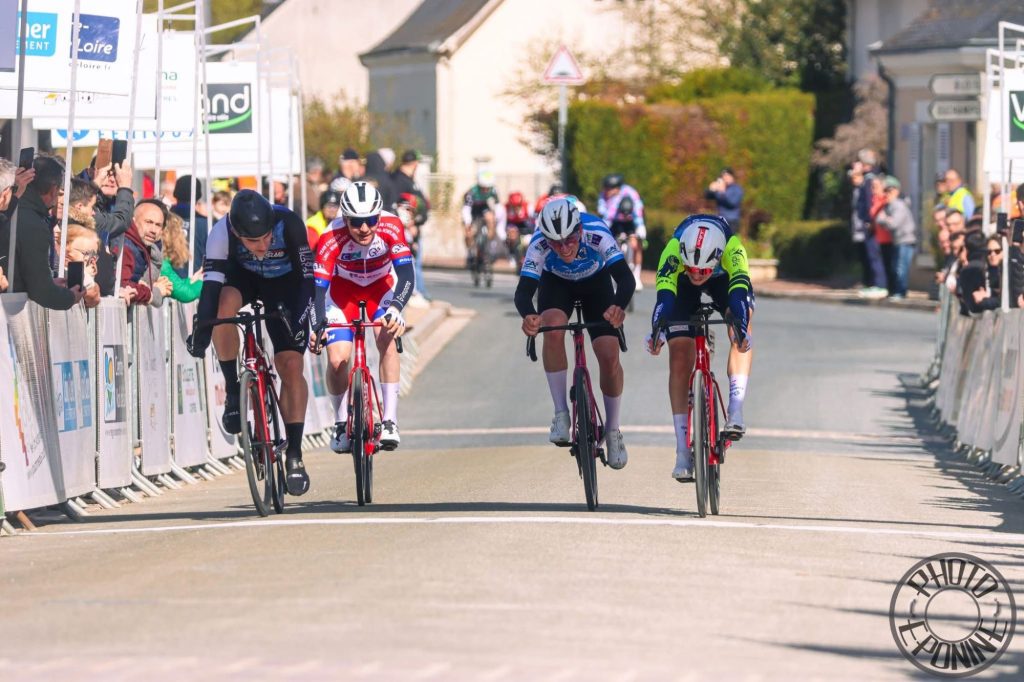
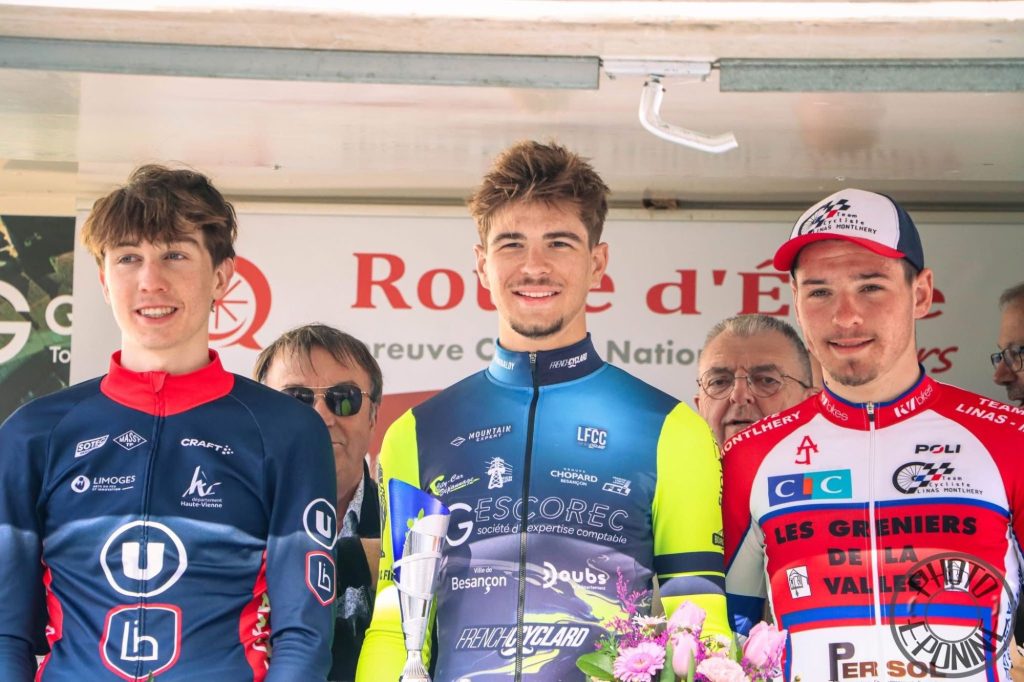
The following weekend, I was back with my club for the Route d’Éole. I managed to take 20 seconds on the peloton on Sunday morning and felt quite confident for the afternoon time trial. I was aiming to win. I eventually finished second, but that was enough to win the overall classification! For some, it’s symbolic to come full circle in a time trial. I see things differently: since my crash in a time trial, I knew I wanted to come back even stronger… in the time trial.
© Photo Eponine
I was a bit emotional on the podium, but I wasn’t really thinking about the crash. I was just enjoying the moment. It was only afterward that I reflected on the past months. I had been waiting for that moment, but I always stayed positive. From my very first days in the hospital, I had one goal: to come back as strong as possible. I’m still young, with many things ahead of me, but I feel this experience has changed me. I’m not exactly the same person anymore. When you come close to the worst, you don’t see things the same way. I already enjoyed cycling, but I think I enjoy it even more now, because you never know when it can all end. Physically, I’m back on an upward curve, and mentally, this experience has made me stronger. I make the most of every moment.
Jimmy Turgis’ view : “Maxime very quickly started looking to the future. It was almost unsettling, because he was talking about performance while he was still in the hospital and couldn’t even walk. His mindset is impressive, because he already knew what he wanted to put in place, and how. In his mind, everything was clear, even though it was a bit less so for everyone else. While we saw the long road ahead, he already saw the finish line. Since he is naturally diligent and disciplined, no matter what it would involve, he knew he would do everything to get where he wanted to be. Great athletes are defined by their ability to bounce back and overcome challenges, but seeing such determination in such a young athlete is remarkable. Maxime is also someone people really like, because he is an endearing person with many qualities beyond sport. He made real friends in the Juniors Program, and everyone was eager to see him back on the bike. It was truly heartbreaking to see him in the condition he was in at the hospital, so seeing him today with a smile is striking. The team, in the broadest sense, is proud to see him performing again and winning. In elite sport, many people train extremely hard but unfortunately don’t achieve their goals. He worked incredibly hard and came back from a long way, so seeing him win is even more special. He has made a successful comeback, and we hope the best is yet to come.”