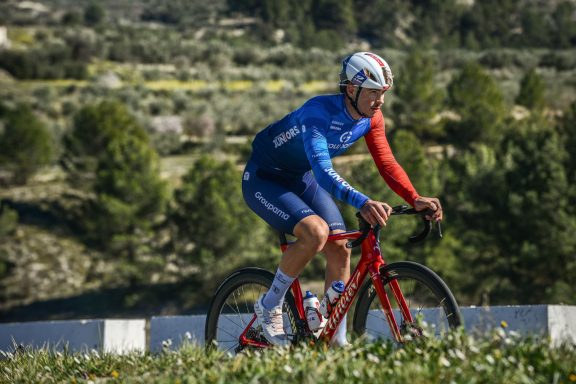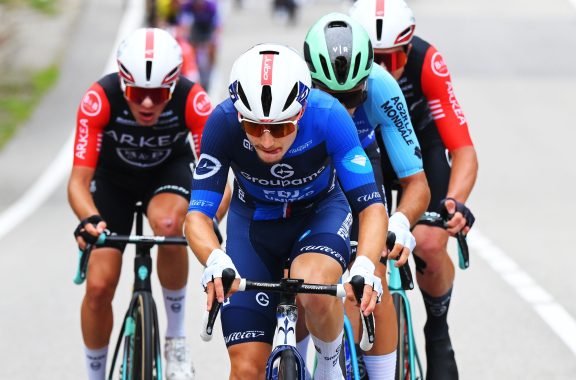


My name is Camille Alric-Thouvenin. I’m 17 years old, I’m from Haute-Savoie, I ride for Bourg-en-Bresse Ain Cyclisme, I joined the Junior Program of Groupama-FDJ United this season. Here’s the story of my very first training camp in Calpe with the team.
SATURDAY, FEBRUARY 14
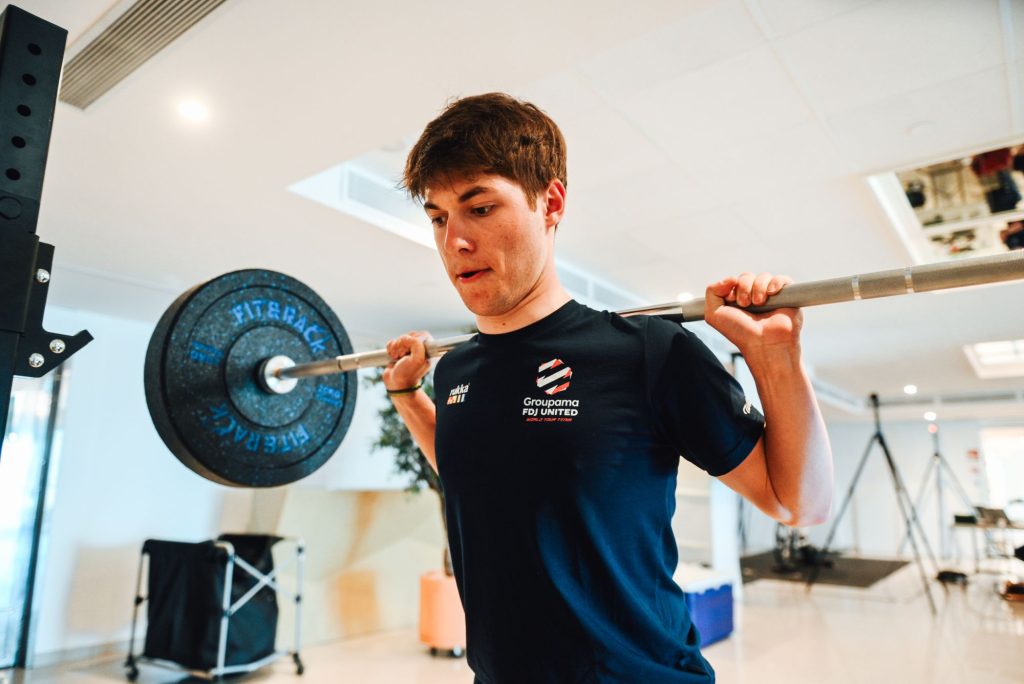
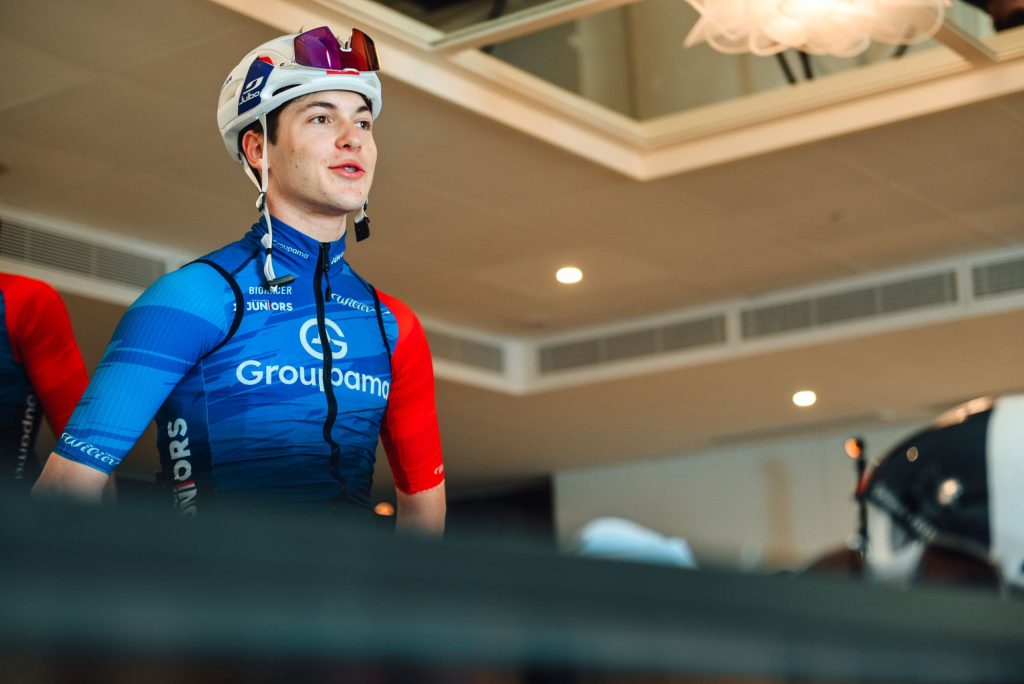
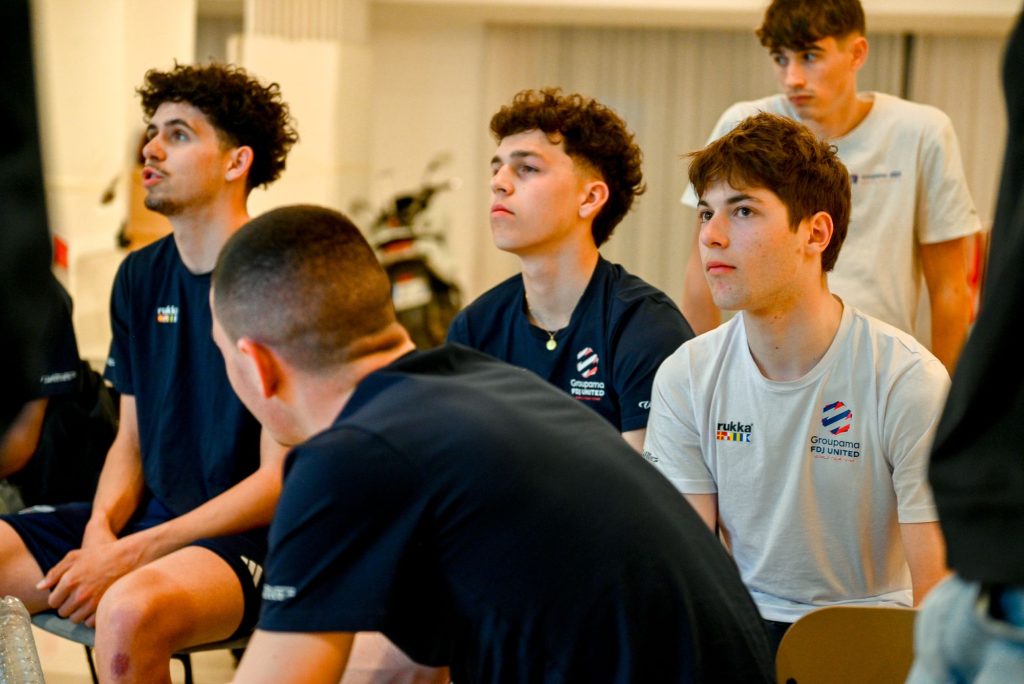
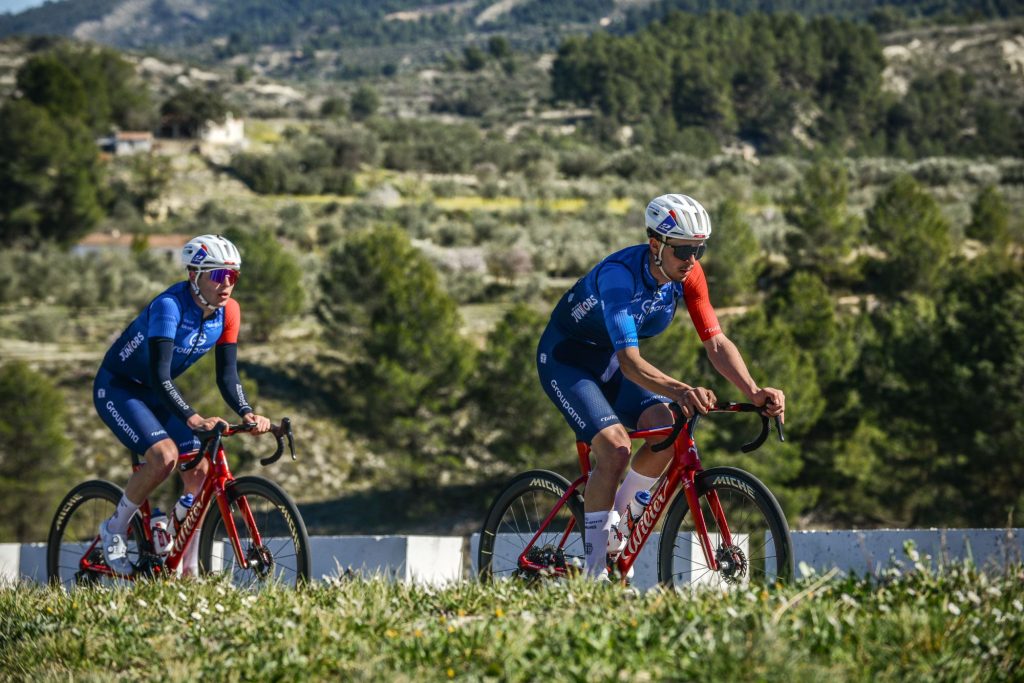
We arrived in Alicante at 8:30 a.m. on the first day. We walked out of the airport with our suitcases, and the team truck was already there, with the bikes lined up right in front! We got changed and headed straight out for a ride towards the hotel. Just being able to ride in bib shorts at this time of year was amazing! The scenery and the weather there are incredible. We did an endurance ride of about 100 kilometers, and, above all, we got to try the new bikes! I had been looking forward to that moment after seeing the pros ride them. It’s pretty crazy to use the same equipment as them. After three hours in the saddle, we reached the hotel and were immediately taken care of. We dropped off our bikes, our recovery drinks were already prepared, and then we went to eat. It was only the first morning, but it already felt absolutely awesome to be there! In the afternoon, I had a meeting with the physical trainer to carry out different tests. We also had briefings every evening. On the first day, they explained how the camp would run and presented the code of conduct.
SUNDAY, FEBRUARY 15
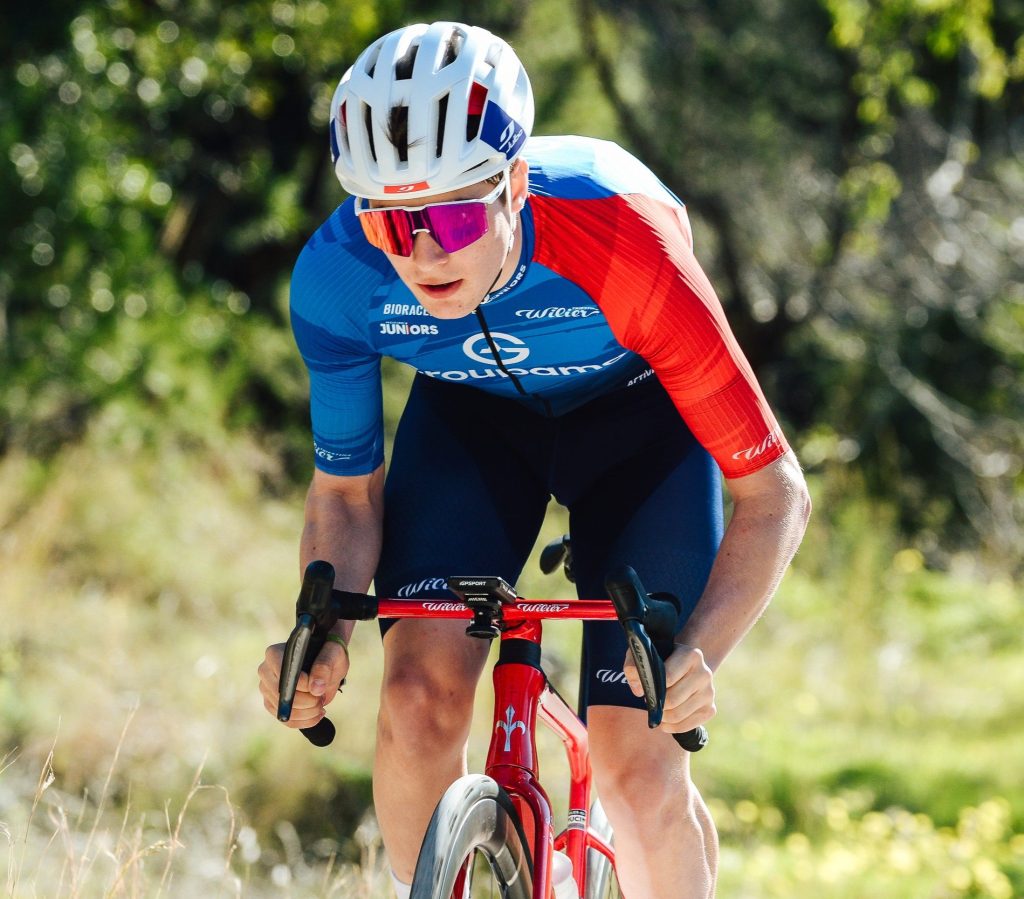
I had an early-morning appointment with the nutritionist, who took skinfold measurements to build a database and track my progress. That day was also the lactate testing day, which was my first time. We had 30 kilometres to warm up, then we rode back and forth on a climb with power targets set by our coaches. Each time we reached the top—about six minutes of effort—we had a small blood sample taken from the ear to measure lactate levels. This will help define even more precise training zones. It’s incredible to have access to this kind of tool as juniors. Not long ago, only pros had it. You really see the level of professionalism.
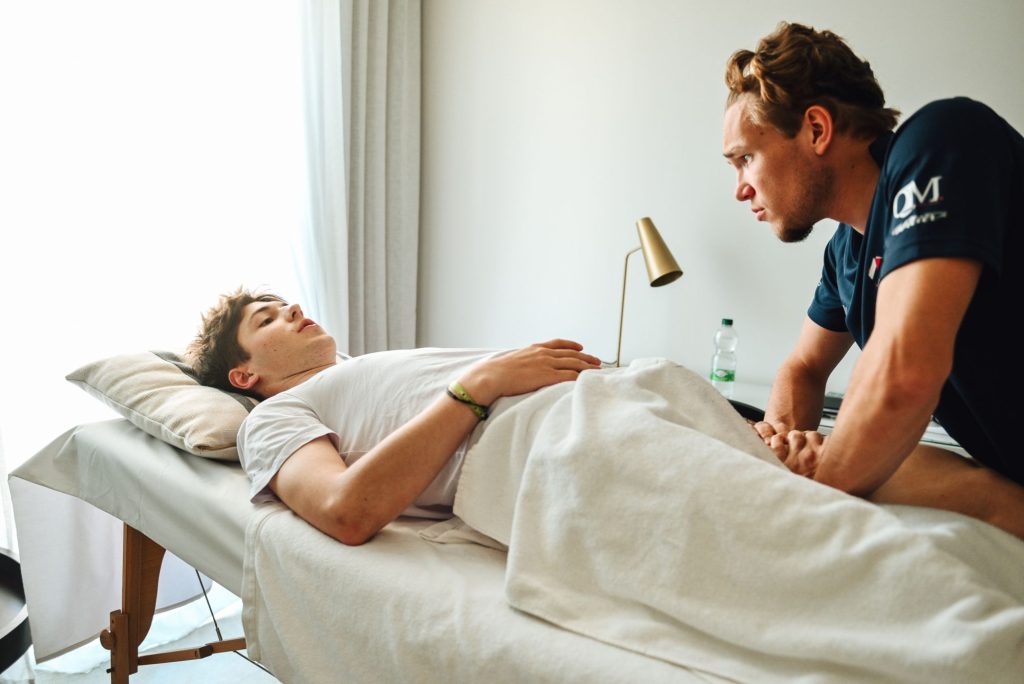
We were followed by a car at all times, had massages every evening, and a nutrition plan for every ride. The resources invested in 17–18-year-old riders are massive. There were two mechanics, two assistants, a sports director, a coach, a physical trainer, a nutritionist, and a photographer—almost as many staff as riders. We lacked nothing. On Sunday afternoon, I had another meeting with the nutritionist. She explained how nutrition works before, during, and after effort, and what would be implemented this year, especially during races. It was very insightful.
MONDAY, FEBRUARY 16
That day we had a 4.5-hour ride, including a 20-minute test and two race simulations. For the 20-minute test, we “simply” had to go all-out up a climb. For the race simulations, we were split into two teams: one simulation was on a flat/hilly course and the other on the famous Coll de Rates. It was great to compete against the others.
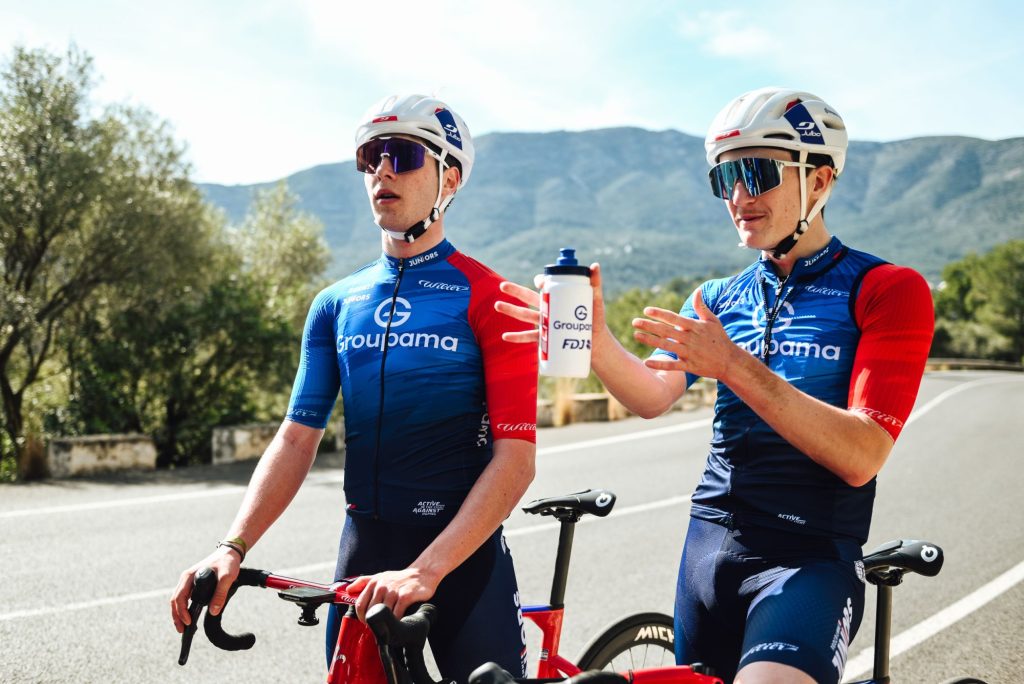
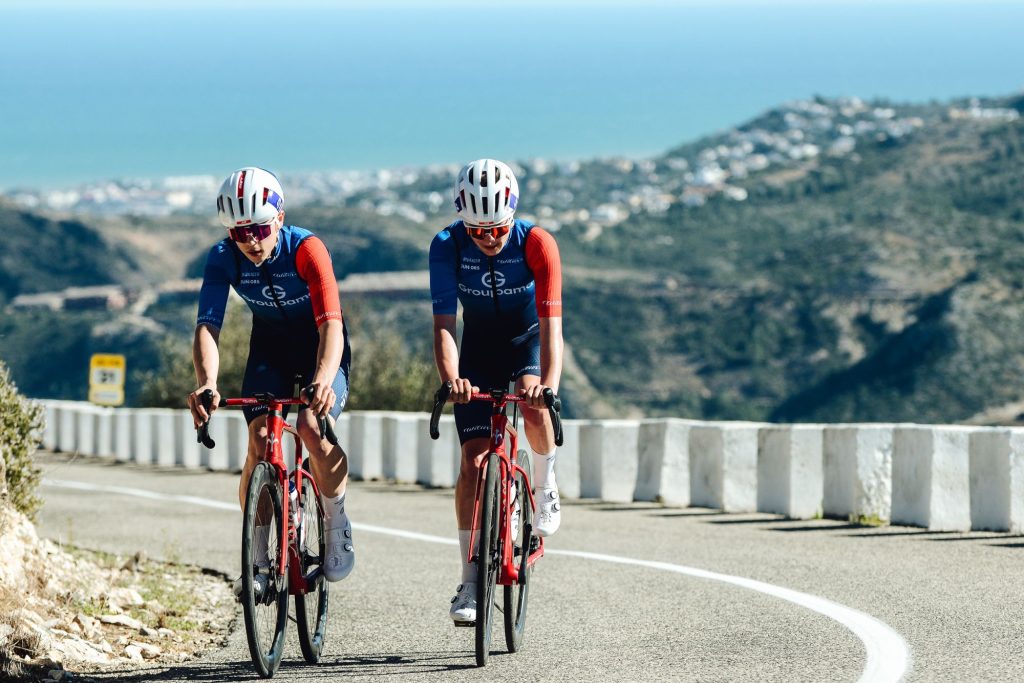
The French national team coach was also in the car all day. When we returned, he presented the calendar, selection process, and values of the national team. Every evening from 6 to 7 p.m., we had study time. We were all together with the coaches and teammates. We could ask questions and help each other. Some had missed a week of school, while I had holiday homework to complete. This academic aspect is extremely important for the team. It’s regularly emphasized, and it’s even written in our agreement that we must not drop out of school. The resources are there for cycling, and we train in a professional environment—but we’re still 17–18-year-olds with baccalaureate at the end of the year!
TUESDAY, FEBRUARY 17
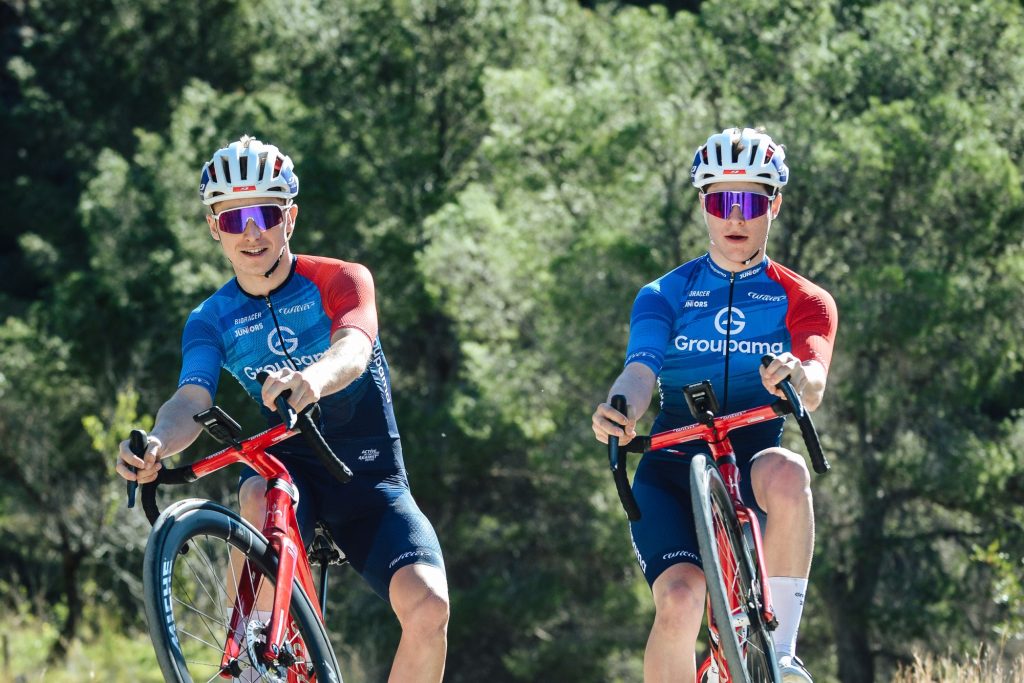
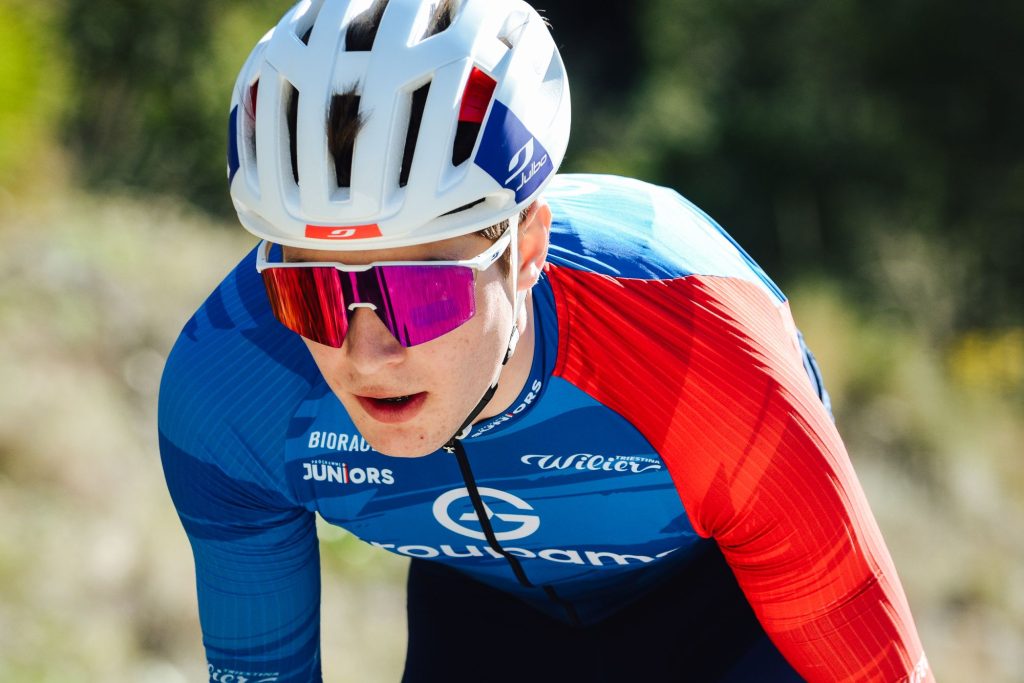
Recovery ride day! The team photographer was there, and we took outdoor photos, individually and as a group, with the nine juniors present at the camp. During interviews in October, we had already done a photoshoot—my first—but this time it was outdoors and in motion. I really enjoyed it; it’s not something we’re used to! The photographer took us to the same location as the riders from La Conti and the WorldTour team. I had seen the photos on Instagram and recognized the spot. It felt strange—in a good way—to be in the same setup as the pros.
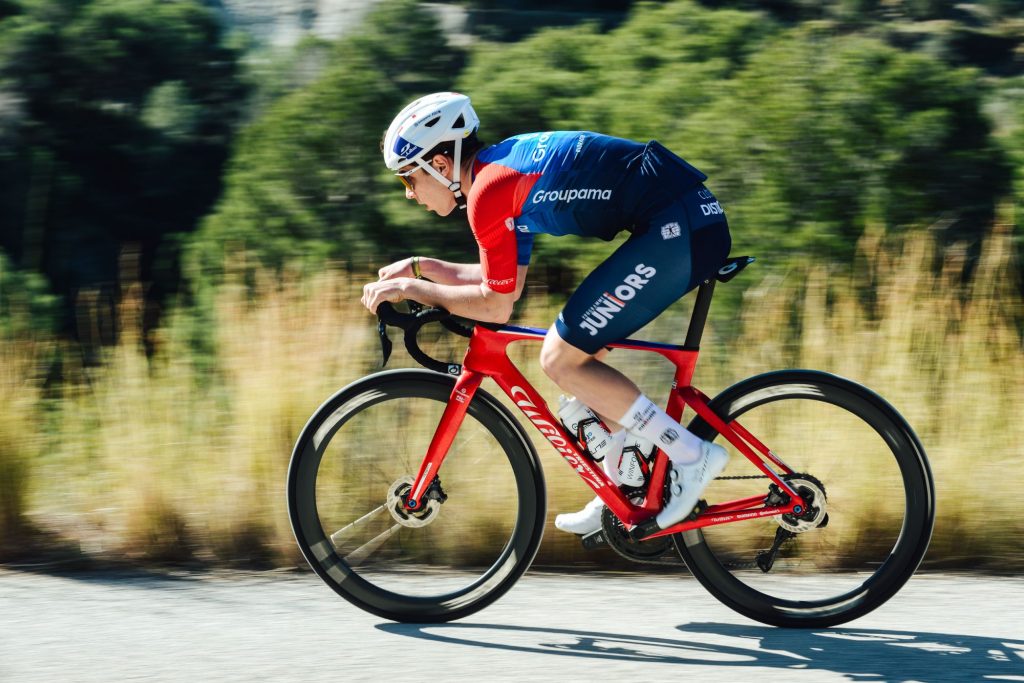
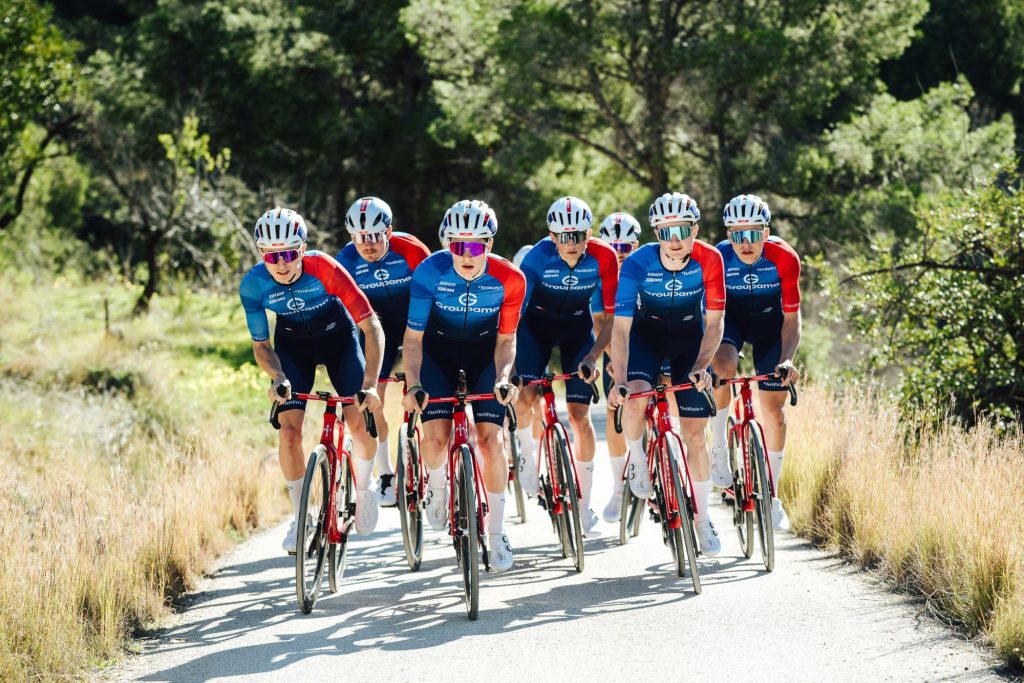
In the afternoon, I had nothing planned, so we went swimming together. It was only the second time we had all seen each other since the team-building camp in January. The atmosphere was great. We had some freedom in the evenings and could go to the beach together. We laughed a lot off the bike. It’s important to build relationships for the future, especially for me as a first-year junior who might often have a domestique role. It’s always easier to ride for friends. We’ll be rivals in our clubs, but with Groupama-FDJ United we share the same colours, so building a real team spirit matters.
WEDNESDAY, FEBRUARY 18
Before heading out, we had muscle activation with the physical trainer, as we did every morning. That day’s training was very demanding. First, we did two sets of 30-second lactate efforts uphill, racing two against two. Then we practiced the lead-out sprint train. Everyone had a role: Clément Bouyssou did the first one-kilometre pull, Timéo Louison the second, I was third for 500 metres, Jules Lefebvre-Fournier did another 500 metres, then it was Maxime Mortier, and Augustin Fahy launched the three sprinters—Gabriel Genter, Alban Picard, and Clément Le Fur—who contested the sprint at the line. We repeated this three times, then finished with two more 30-second lactate efforts! I was completely drained at the end, especially since we were already halfway through the camp with plenty of kilometers in our legs. The standards required had stepped up another level, especially facing juniors who can sprint incredibly fast. But it pushes you forward, it motivates you and makes you want to improve. For me, it was the toughest day of the week.
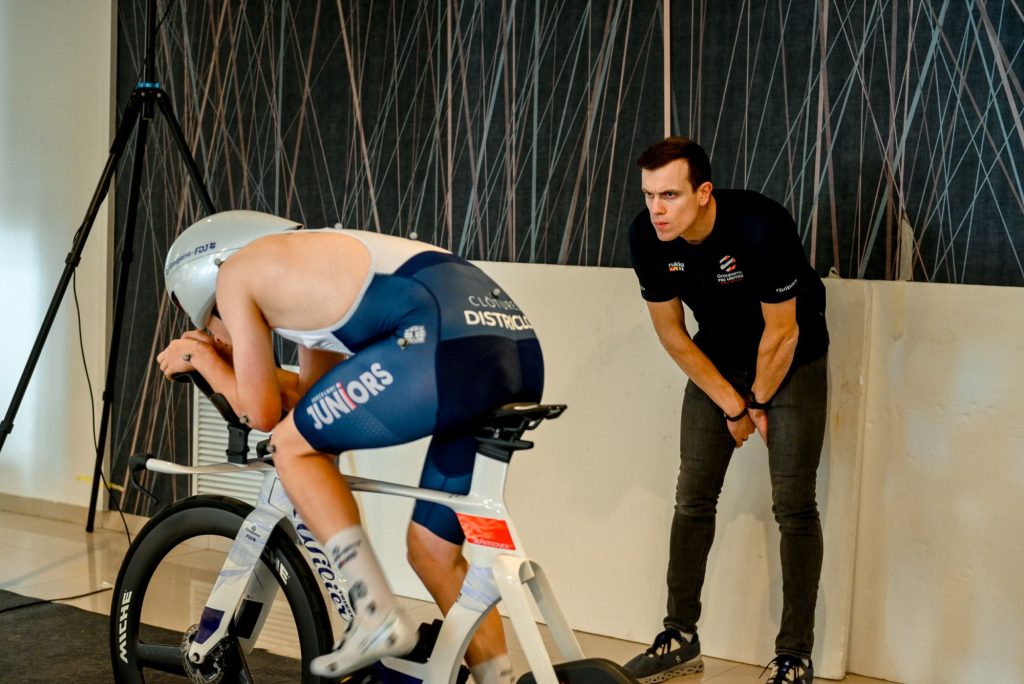
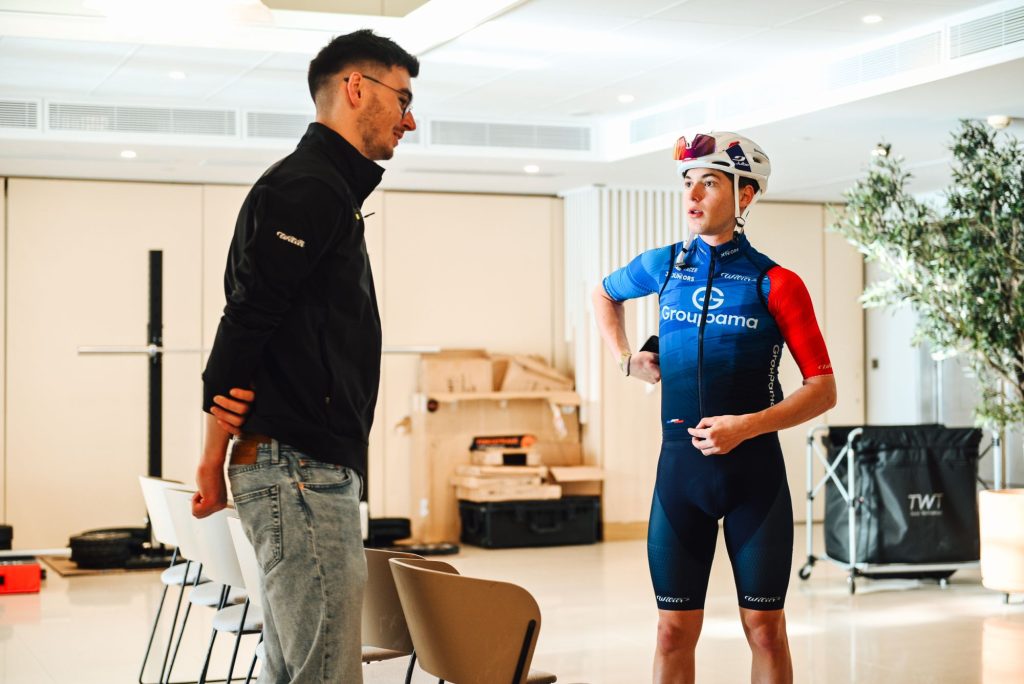
In the afternoon, I had my time-trial bike fitting with Anthony Bouillod, coach in the WorldTour team. Once again, you could see the level of resources—sensors, 3D motion capture… the same system used by the pros for millimetre-precision positioning. Since I love time trials, it’s amazing not only to have a time-trial bike like the Supersonica but also a super precise setup.
THURSDAY, FEBRUARY 19
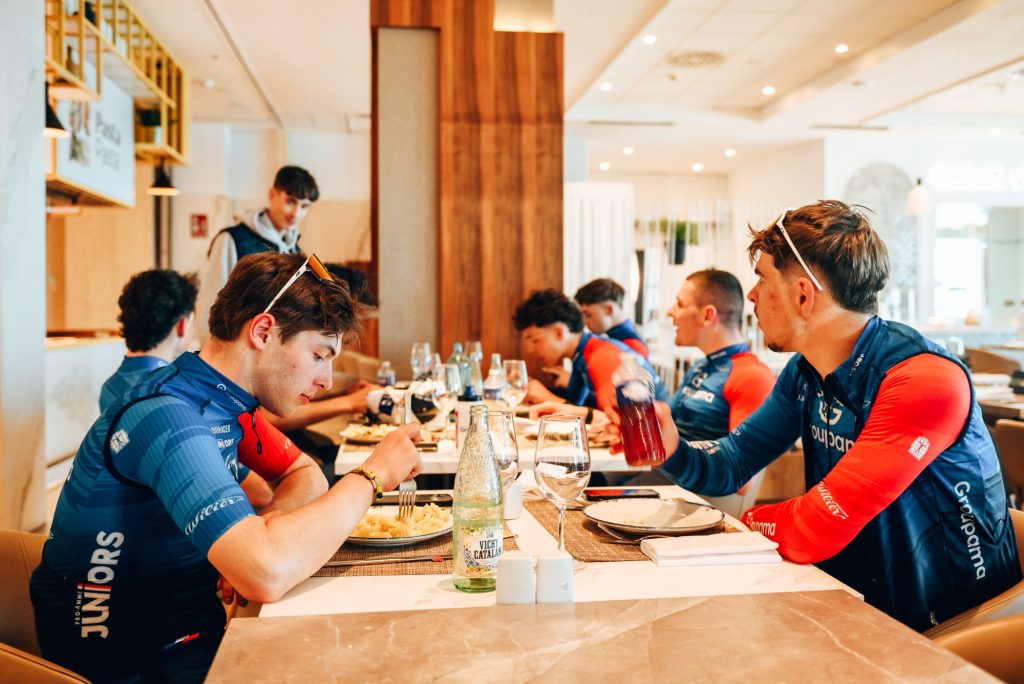
Endurance ride day: 147 kilometers in under five hours. It was only the second time I had ridden that far. On the first climb, we crossed paths with Mathieu van der Poel and Matthew Brennan. Later, we rode through a more desert-like area, windy and with little vegetation—an unusual setting. On the second climb, we met Slovak champion Lukas Kubis and rode the whole ascent together. It was a great moment—we talked about our race calendars and many other things. Speaking of that… the previous Sunday we saw Tadej Pogačar, and on Monday we even rode in his wheel! I had the biggest smile on my face. That’s one of Calpe’s advantages: you can see the pros and sometimes even ride with them. With the two Clément, we finished the ride on our time-trial bikes to validate the bike fitting from the day before. We rode the last 30 kilometres in TT position, which was great to test it in more natural conditions. In the afternoon, I had a meeting with Yann [Le Boudec] and Jimmy [Turgis] to discuss the start of the season and the provisional race calendar.
FRIDAY, FEBRUARY 20
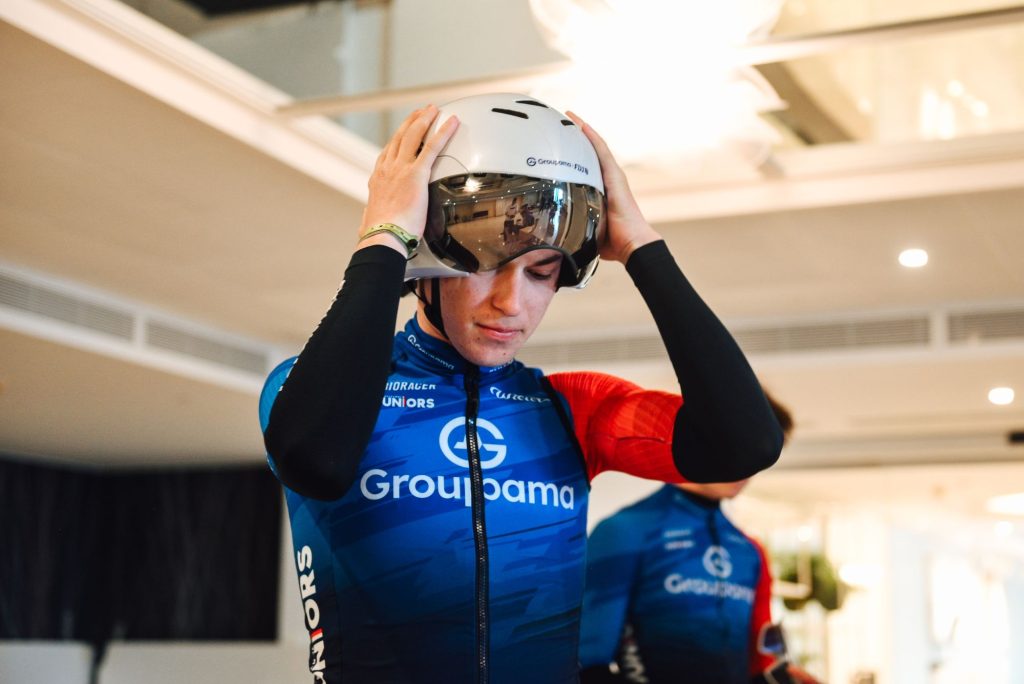
On the final day, I tested the time-trial bike one last time. We were split into two groups: one on TT bikes, the other on road bikes, riding a few minutes apart. On the way out, we did five-kilometre efforts in Zone 3 to get used to pushing watts in position. On the way back, on the same stretch, we practiced four-man team time trial efforts—an exercise that’s important to the team.
It was the last ride, and a few hours later, we all headed home. There was definitely a bittersweet feeling, especially knowing school started again on Monday! Physically, doing a camp like this with so much volume before the season starts is ideal for improving. Technically, we completed every possible test and workshop to better understand ourselves and train more effectively. I left with tons of enriching experiences and an enormous desire to improve. It felt almost like the professional world—it definitely makes you want more. I can’t wait for the first races with the team. Right now, I’m living a waking dream.